 |
My mom radar goes up quickly when my kids talk about interpersonal problems with their classmates. As I talk through situations with them, I always struggle because I know that I’m only hearing half the story. At times I’ve checked in with a teacher to hear another perspective. In the end, though, I still don’t feel like I have a handle on what has really taken place and am even less sure of how to help them handle it. After reading this month’s articles, though, I finally feel like I have some tools to help equip my kids to deal with these tricky situations. With one written by a Christian counselor and another by a Christian teacher, these articles are informative and practical.
Nicole Balza

As the school year begins, I often get requests to speak to students and parents about bullying. There are many aspects to explore on this topic, but here are two of the questions I always attempt to answer.
What is bullying?
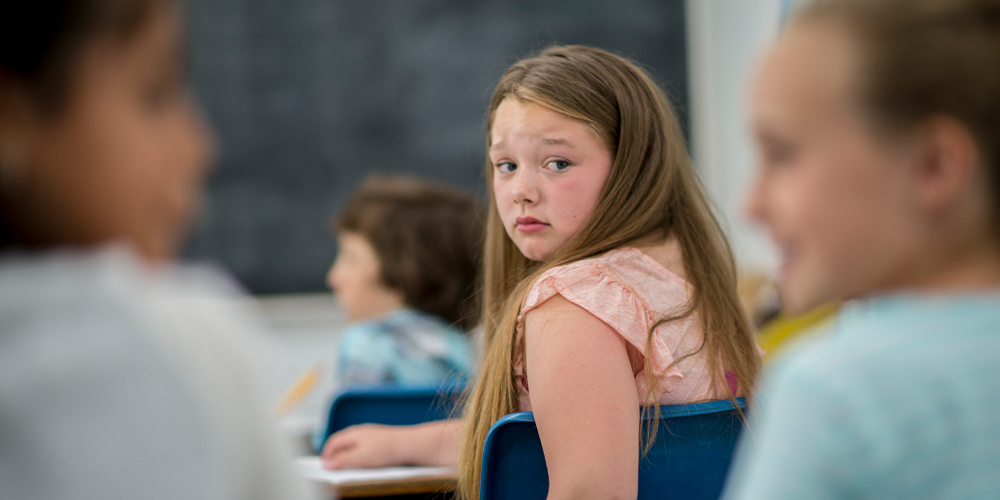
According to expert Dan Olweus, bullying happens “when a person is exposed, repeatedly and over time, to negative actions by one or more others, and has difficulty defending himself or herself.” We are all capable of being unkind or careless at times, but bullying involves an imbalance of power, and it is usually intentional and persistent. It’s a group of children that finds a way to exclude one specific child most days at recess. It’s the strong boy that physically intimidates a smaller boy any time they are in the bathroom together. It’s the popular girl who regularly posts embarrassing pictures on social media of the girl with no friends.
What can parents do to help?
We can take a few important steps as parents to arm our children against the negative effects of bullying.
- We can give them truthful and persistent messages about who they are. First John 3:1 says, “See what great love the Father has lavished on us, that we should be called children of God!” When our children hear consistently from an early age that they are loved and valued by God and by us, they are more likely to recognize bullying messages from others as lies.
- We can teach assertiveness and conflict resolution skills. A boy in my daughter’s preschool class would get jealous if she didn’t want to play with him. One time when she wanted to sit with the girls in her class, he told her he wouldn’t be her friend if she did. She said, “That’s too bad because I like being your friend. But I’m still going to go and sit with the girls.” If she had allowed his words to affect her, he would have likely tried that tactic again. By answering kindly but firmly, she created a boundary and paved the way for a different dynamic.
- If children regularly hear unkind words, disrespectful language, or aggressive tones from us, they will come to believe that it is normal for others to talkto them that way. They may even become bullies themselves, because they see bullying behaviors “work” at home. Instead, we can talk together about how God wants us to treat each other, set clear standards of behavior, and model respectful communication and empathy.
- We can build relationships with the parents and teachers in our children’s lives so that communication is more effective if bullying becomes an issue. One time I met a mother for coffee who believed my son was bullying hers. Because we already knew and respected each other, we were able to work together to understand each other’s perspective and develop strategies to deal with any inappropriate behaviors.
- Finally, in some situations, we may need to take more direct steps to help our children. This may include creating positive opportunities for connection with new peer groups, taking them out of a specific class or school, or even logging and reporting certain behaviors to authorities.
Bullying is a difficult reality at times, but as parents we can play a powerful role in preventing and addressing it. Through love, structure, and involvement, we can guide our children to recognize their worth in Christ, treat others with respect, and stand up to bullying behaviors with truth and confidence. “Do not be overcome by evil, but overcome evil with good” (Romans 12:21).
Sarah Reik
As both a teacher and a mom, I hear about friendship struggles daily. Often, kids simply need an adult to listen with empathy so they can process the situation and begin solving the problem themselves. After listening, I gently remind them that all people—including their friends—are sinners and we all need forgiveness every day.
I then ask whether they’d like help communicating with their friend or if they already have a plan. Some kids know exactly what to do next, while others prefer that an adult guide them through the conversation. Still others feel the issue was a one-time mistake, and they choose to forgive and move on. If your child would like adult help in resolving the issue, the best person to ask is usually the leader directly involved—someone who knows both children and can support them in working through it. Parents can help by having a brief conversation with that adult to ensure everyone is on the same page.
After these kinds of interactions, it’s natural for parents to worry that the behavior could escalate into bullying. According to the Anti-Bullying Alliance, bullying is “the repetitive, intentional hurting of one person or group by another, where the relationship involves an imbalance of power. It can be physical, verbal, or psychological, and happen face-to-face or online.”
By working together—parents, teachers, coaches, and leaders—we create environments where children are guided in truth and love.
This highlights the importance of parents continually listening to and talking with their children. Christian kids will make unkind or harmful choices at times because they are sinners too. That’s why adult presence matters: to teach, intervene, address sinful behavior, and help them repair broken relationships.
Because parents aren’t always present during activities or school, communication with teachers and coaches is key. When all adults involved work together, children can be supported in solving problems quickly. Bullying can take root when adults overlook children’s struggles and allow intentional, harmful behavior to persist.
Caring parents can also take the initiative by asking school or team leaders how they handle friendship struggles and conflict so that those efforts can be reinforced at home. When there’s a clear plan—supported by active supervision and consistent teaching on how children should treat others—the chances of bullying are greatly reduced. God reminds us in Proverbs 22:6, “Train up a child in the way he should go; even when he is old he will not depart from it” (English Standard Version). If no plan exists, it’s appropriate to encourage leaders to create one so that children are taught to grow in positive, respectful relationships—not left to navigate social challenges on their own.
By working together—parents, teachers, coaches, and leaders—we create environments where children are guided in truth and love. Teaching them to build healthy relationships and respond to conflict with grace not only prevents bullying but also shapes godly character for life.
Rachel Blum
How to respond to a bully
Bullying is about power. Brooks Gibbs, a speaker and educator who specializes in bullying prevention, reminds kids that “the moment you get upset, you give them control.” Rather than getting emotional, he encourages these key phrases:
- “Okay.”
- “That’s your opinion.”
- “Maybe.”
- “Thanks for the information.”
Gibbs put these into action in a video presentation.
Author: Multiple
Volume 112, Number 09
Issue: September 2025