 |
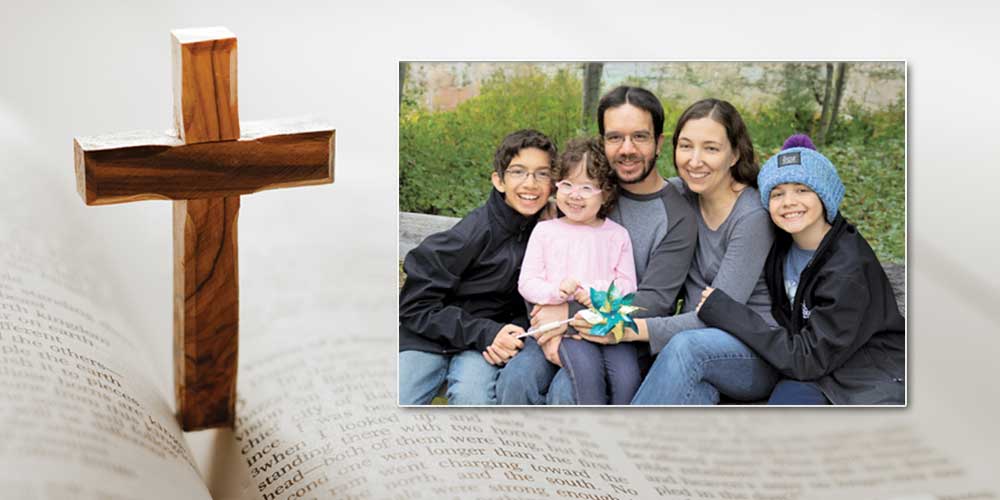
A family finds solid assurance in God’s love, which gets them through life’s hardest trials.
Growing up, Zuber Shah, now a member at Salem, Stillwater, Minn., says he often felt confused about religion. He was born in Chicago to parents with very different backgrounds. His father, originally from India, was a practicing Muslim. His mother was a Catholic from Minnesota. When his parents divorced, his father stayed in Chicago with his oldest brother, and Zuber moved to Stillwater, Minn., with his mother and two brothers.
From then on, Zuber was raised Catholic. However, when Zuber visited his dad, he would go to the mosque. “When I was in Chicago, I was Muslim. But when I was in Stillwater, I was Catholic,” he says. “As I got older, I said to my mom, ‘This is confusing. How does this work?’ ” She replied, “You can decide for yourself when you turn 18.”
But when Zuber turned 18, he was more confused than ever. “I had these two major forces in my life, both saying ‘This is true,’ ” he says. “But I knew they both couldn’t be true.” He says he knew Islam “was not the right thing,” so he continued going to the Catholic church.
Gaining clarity
After he graduated from college, Zuber met Sara. They started dating, and soon they were talking about their faith. Zuber found out that Sara and her family were looking for a new church home. They decided to try St. John’s, a WELS church near Stillwater. Zuber says God’s Word was preached more plainly, and there was a stronger emphasis on the Bible. “At that point, I was Catholic, but I was also confused,” says Zuber. So he and Sara decided to attend services at his Catholic church one week and at St. John’s the next.
Zuber and Sara eventually got engaged. They were still attending both churches, and they were struggling with the differences between Catholicism and Lutheranism. The WELS pastor told them: “If this drives you to the Bible, it can strengthen your marriage.”
Zuber says that’s exactly what happened. “Sara is good at asking questions, like ‘Why do you believe this?’ ” he says. “The more questions would come up, the more we would go to the Bible.” Zuber says he was moving closer to Lutheranism, and he finally signed up for a Bible basics class at St. John’s. “The more I learned about the Lutheran faith and what the Bible taught, the less I agreed with the Catholic faith,” he says. The Shahs, now married, became members and have served in several roles at St. John’s over the years.
Finding community
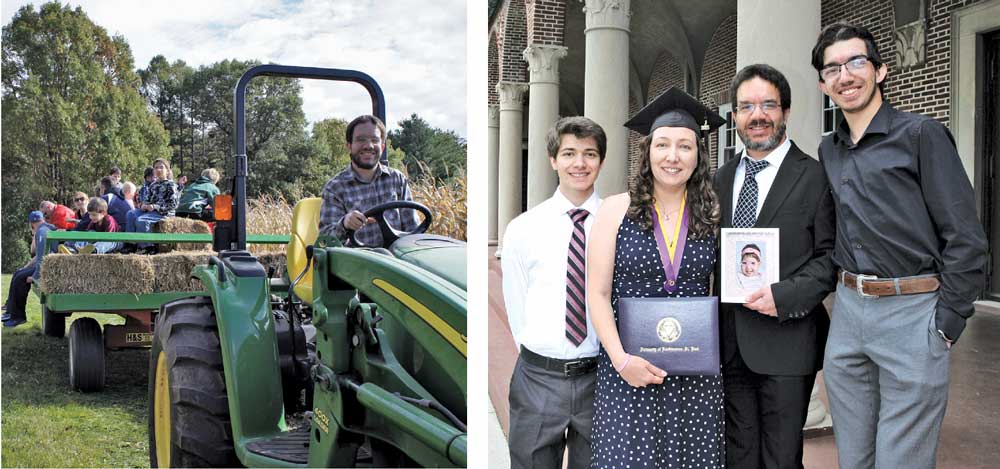
When they started having children, the Shahs transferred to Salem, also in Stillwater. “It was a really good fit for us,” says Sara. “We found a community with people our age and kids our age.” That community became an important part of their lives, helping and supporting them through their hardest challenges.
When their youngest, Eliana, was born, she had serious medical conditions, including spina bifida and hydrocephalus. After being baptized in the hospital, she underwent two surgeries immediately. She recovered, but after a pretty stable first year, she began having massive seizures.
“We were in a constant state of tension. We were just waiting for another one to strike and waiting for another 911 call and ambulance ride to hospital,” says Sara. “I remember the police and paramedics going through the living room and the boys, who were 8 and 10, just watching this happen to their sister.” Because of Eliana’s condition, the Shahs couldn’t travel anywhere that was more than 15 minutes away from a hospital.
Also diagnosed with a Chiari malformation at birth, Eliana needed another surgery to relieve pressure on her brain. After her surgery, Eliana had complications, and follow-up tests showed that the procedure was not successful. Her care team also discovered a fast-growing tumor in her abdomen. Eliana had another surgery to remove the tumor and started chemotherapy on her second birthday.
During it all, “the church wrapped their arms around us and gave us the most amazing church hug you could ever get,” says Sara. “The families at Salem were there for us. Everyone wanted to help. They made meals and helped us with things around the house that we could never get to.” She says this helped keep things stable for their boys, Eli and Isaiah. “Whether it worked with their schedule or not, these families would take our boys when we needed it. They made our boys a part of their family and gave them stability.”
While Eliana was going through additional surgeries and rounds of chemotherapy, the Shahs had to be away from home for weeks at a time. Sara says the boys would stay with them for a week or two, then go back to school for a week or two. “The school made it work and supported us, so we could still be a family in the middle of all of it,” she says. “It was a huge blessing for our boys to be with their sister.”
Church members visited the Shahs in the hospital. They prayed, sang, and watched church services together. Zuber says this gave them unique opportunities to witness to hospital staff. The Shahs also listened to Christian music throughout their hospital experience, including “Shoulders” and “Joy” by FOR KING + COUNTRY. “Eliana would listen to those songs when she would have to take her meds,” says Zuber. “Having the gospel message there in that moment and sharing it with everyone who was there, whether they were believers or not—it brought us peace.”
Grieving with hope
Eliana had her last round of chemotherapy right after her fourth birthday, but then her cancer came back with a vengeance. “Leading up to her last ER visit, I brought her in the house and went to set her down,” remembers Zuber. “She said, ‘I want to go home.’ I told her, ‘Eliana, we just got home. We are at home.’ And she said, ‘No, I want to go HOME.’ She had faith, and she knew where her real home was.”
Within a week, Eliana went to her real home in heaven. “The boys were there with us when she died,” says Sara. “They were old enough, and we wanted them to have peace and take fear out of the dying process. She just stopped breathing; it was very slow and gentle.”
Sara continues, “It’s an interesting dynamic as a Christian. You have this eternal hope that gives you peace and joy, but that doesn’t take away the pain. Jesus wept. He knew everything; he knew the future, he knew the past, and he knew the present. He knew he was going to raise Lazarus from the dead, but he wept,” she says. “We still have that human struggle, that experience. We still grieve, but we grieve with hope.”
Zuber agrees. “Faith is the only thread that pulled us through everything,” he says. “I have a different appreciation for the book of Job and how he suffered but still worshiped and questioned God; he never turned from God. . . . You can grieve and still be faithful.”
Losing Eliana impacted the Shahs in different ways. Sara went back to school to become a nurse; she currently works in pediatrics, providing care for children with serious medical conditions. Eli is studying biomedical engineering, after seeing the challenges Eliana faced in a wheelchair. Isaiah wants to become a world missionary. “I have a deeper appreciation for loss and a greater compassion for suffering,” says Zuber. “I can relate to a whole different group of people and share a message of eternal hope, while sharing in the grief of earthly loss.”
He continues, “God never meant for us to walk these roads alone.” “Don’t stop talking to God, even if you’re angry, frustrated, confused. . . . Reach out to the body of Christ. Receive blessings when people offer. Sometimes it is as much of a blessing for them to give as it is for you to receive.”
Author: Alicia Neumann
Volume 113, Number 09
Issue: September 2026
Image: iStock
Frustration and forgiveness
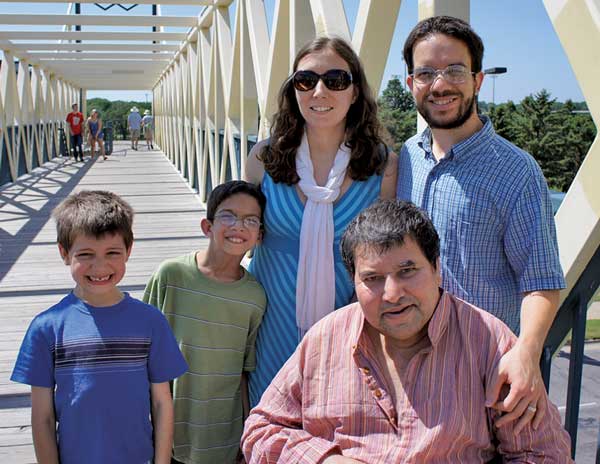
Zuber and his father had a complicated relationship. His father was a prominent figure in the Indian community in Chicago—a radio announcer who entertained Indian poets, musicians, and actors when they traveled to Chicago. “Everyone knew my dad,” says Zuber.
Although Zuber was raised Catholic, his father still expected him to follow Indian customs and Islamic rules. Zuber and Sara’s engagement defied both: Sara was not Indian, she was not Muslim, and she was not going to convert. Zuber’s father was upset and threatened to disown him. Although his father finally relented and attended Zuber and Sara’s wedding, their relationship wasn’t the same.
“A year went by, and it was quiet with my dad,” remembers Zuber. “I wanted to keep a relationship with him, whether he disowned me or not. I wanted to try.” When Zuber reached out, his father invited them to Chicago so the extended family could have time to gather and celebrate their marriage. The next day, he brought Zuber and Sara to his religious leader to bless the marriage. The family joined them, and while there, the religious leader tried to convert Sara to Islam. Although it was intimidating, Sara and Zuber used this as an opportunity to share their faith. “We stood our ground on what we believed, and they respected us for that,” says Sara.
A few months later, Zuber’s father had a debilitating stroke. “He could never talk after that,” says Zuber. Although Zuber continued reaching out to his dad over the years, he had an especially meaningful visit before his father died.
“I went to visit him, by myself,” says Zuber. “I forgave him for any wrongs he had ever done to me. I shared the gospel with him, and he cried.”
Although Zuber had experienced a lot of grief and frustration, he says it was important to forgive his father and start over. “I could only do that because of what God has done for us.”