 |
Meet Shifty, an autistic 11-year-old with ADHD who doesn’t just attend worship but lives it.
They say children are a blessing from the Lord. I believe that with my whole heart.
But sometimes your blessing is breakdancing in front of the baptismal font during the children’s anthem, twirling like a figure skater on opening night, while the other kids stand stock-still and squint at the teacher directing them.
Don’t believe me? I can’t make this stuff up—and I have the video to prove it.
That’s our Shifty. Nicknamed for the way she shifts, spins, and defies all laws of physics. In other words, she is unpredictable.
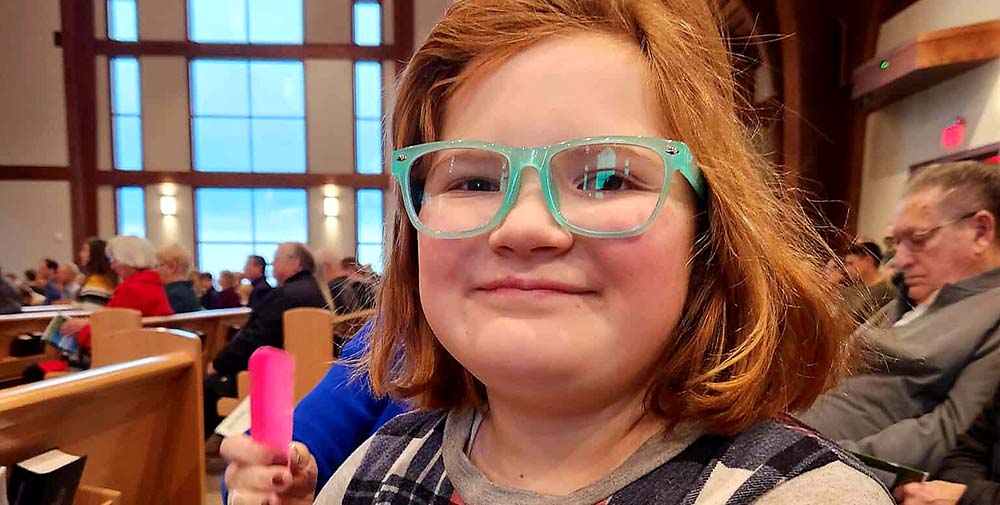
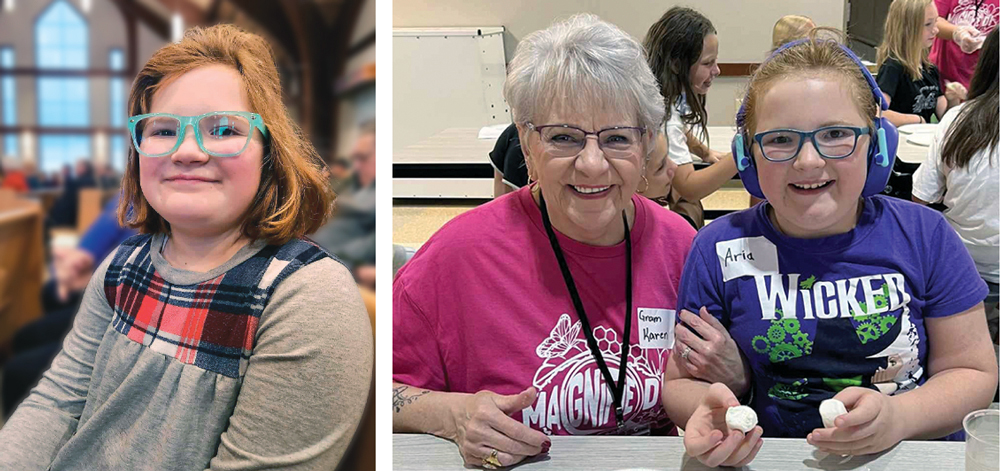
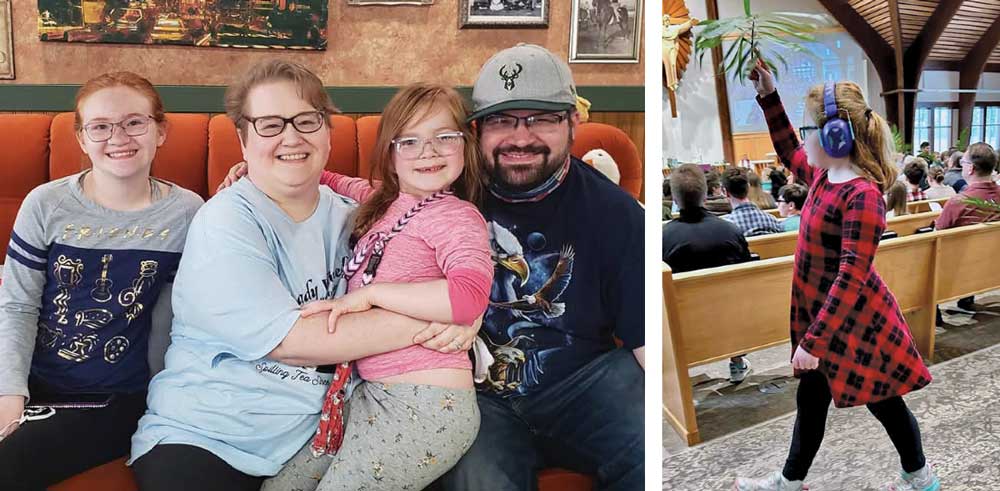
She has red hair that makes her look like she’s been kissed by fireworks, teal glasses that are always smudged, and a pair of purple noise-canceling headphones she wears like a crown. She’s 11 now, autistic, ADHD (attention-deficit, hyperactivity disorder), and fiercely herself in all the ways I simultaneously admire and try to survive.
And if you’ve ever wondered what it’s like to raise a child who does not just attend church but inhabits it like a Broadway stage, let me show you to our pew.
Living worship and loving big
When Shifty was younger—somewhere between “barely able to sit” and “should probably have a helmet”—church was less a quiet spiritual retreat and more a full-body obstacle course. The pew wasn’t a place to sit reverently; it was a springboard, balance beam, and hideout for Cheerios. She did not just attend worship. She lived it—with limbs flying and joy overflowing.
Our neurodivergent kids are not distractions from the presence of God. They are invitations to see him in a different way.
We called it “church pew gymnastics.” She could slither under pews like a spy on a mission, leap over hymnals like hurdles, and make a full-body slide across the welcome mats during the closing hymn. She once used the coatrack as monkey bars and nearly launched a stack of bulletins like confetti.
But her most iconic move? The pastor sneak-hug sprint.
As the service wrapped up and the organ launched into the final chords, most people stood quietly to sing. We’re Lutheran. We do not emote much. Shifty? She was locked in on her target like a holy heat-seeking missile. After the service was over and the pastors went out to greet the parishioners in the entrance, she’d take off full-speed down the aisle, arms open wide, and tackle-hug the pastor around the waist with the force of someone trying to win a stuffed animal from a claw machine. One time she shouted, “Good job!” as she made contact, as if she had just watched the winning touchdown at the Super Bowl of Jesus.
No one trained her to do this. Believe me, we did not encourage it. She just loved big. And she understood—deep in her bones—that church was a place to connect, not just to contain.
When church feels like a wrestling match
If you’ve ever left church drenched in sweat, carrying three stuffed animals, a crumpled craft from Sunday school, and your own bruised ego—welcome! You are not alone. If you’ve felt the sting of someone else’s side-eye or silent judgment when your child flapped, bounced, or shouted, “That was awesome!” mid-sermon, believe me, we get it. We are your people.
Shifty wasn’t misbehaving. Really. Louder for the “kids should be seen and not heard” generation in the back. She was being a sensory-seeking, hyper-connected, ADHD-and-autistic kid in a world not built for her rhythms.
ADHD means her joy often arrives ten seconds before her filter.
Autism means she experiences church with intensity: the colors, the music, the smells, the people— it is all big. And she responds with equal bigness.
She was participating in worship, just not in the way the bulletin outlined.
The gospel according to the wiggle
We often think of worship as hushed and orderly, but Scripture paints a much broader picture.
David danced before the Lord with all his might (2 Samuel 6:14).
The psalms are full of shouts of praise (Psalm 100:1).
Jesus welcomed the children (Matthew 19:14), and children are not always calm and sanitized. They can be messy, noisy, and curious.
Our neurodivergent kids aren’t distractions from the presence of God. They are invitations to see him in a different way—more clearly—through spontaneity; authenticity; and wild, unscripted love.
Encouragement for the parents in the back row
To the parents sweating through the liturgy, wondering if they’ll ever sit through a full service again without breaking up a sibling wrestling match—God sees you.
To the parents who feel like Sundays are more about surviving than worshiping—God is with you.
To the ones who replay awkward stares, whispered comments, or that moment your child yelled, “I hate shoes!” during the Lord’s Prayer—God’s grace is bigger than all of it.
And that child you’re guiding with trembling hands and tired eyes? Fearfully and wonderfully made (Psalm 139:14).
You’re not doing it wrong. It’s just hard. And real.
Even on the days your child literally sprints toward the pastor like he’s part of the halftime show.
What we’ve learned
We often say, “She’s not misbehaving. She’s just wired differently.” And that’s true.
But it’s also true that being wired differently doesn’t give anyone free rein to swing from the chandeliers (even metaphorically), hijack every conversation, or treat people unkindly.
Being ADHD and autistic is not bad behavior, but it also doesn’t give a pass to act without growth.
Here’s the key distinction we’ve learned to live by: It’s not an excuse. It’s an explanation.
Shifty’s brain works differently. Her impulses are faster than her filters. Her sensory world is bigger, louder, and more intense. Her ability to process social cues and unspoken expectations isn’t automatic. It’s a skill she must build, again and again, like a muscle.
So when she launches into full-volume storytelling during the sermon, it’s not rebellion. It’s regulation.
When she sprints down the aisle to hug the pastor, it isn’t defiance. It’s dopamine and joy in motion.
When she stims, fidgets, blurts, bounces, or freezes, it’s not disobedience. It’s neurobiology.
But here’s the sacred tension: We still must teach. We still shape. We still discipline. We don’t discipline her for being who she is. We discipline her within who she is.
Because grace doesn’t mean no growth. Grace means growth with gentleness.
Scripture shows us this tension too—grace and growth walking hand in hand. Jesus didn’t shame people for their limitations. But he also didn’t leave them there. He not only met people where they were, but he also called them to follow him forward. That takes time. Patience. Repetition. And oceans of grace.
If you’re raising a neurodivergent child and caught between “I want to honor who my child is” and “I don’t want to raise a menace to society”—welcome. You’re not failing. You’re parenting in 4D. You’re doing the holy work of discipling a brain that zigzags through a world that prefers straight lines.
Keep going. Keep teaching. Keep showing up.
Author: Kaycee Welke
Volume 113, Number 1
Issue: January 2026