 |
For Christians in the developed world, it’s hard to imagine places where the gospel cannot be easily shared. In fact, of the more than 8 billion people alive today, as many as 40 percent—more than 3 billion souls—belong to “unreached people groups,” or communities with little to no opportunity to hear about Jesus’ saving work.
WELS Board for World Missions has recently called experienced WELS missionaries to reach two such groups: the Wolof people of Senegal in West Africa and the Hindi-speaking population of India. “Both of these people groups are in deep need of the gospel,” explains Larry Schlomer, administrator of the Board for World Missions. “The Wolof tribe is less than 1 percent Christian, and the Hindi government has created procedures that allow a public spectacle to be made of anyone who leaves the Hindu faith.”

In the West African country of Senegal, approximately 95 percent of the population is Muslim; among the Wolof tribe specifically, that is closer to 98 or 99 percent. Daniel Kroll—a longtime WELS missionary in Africa who accepted the call to Senegal—and his wife, Karen, are preparing for their new mission field. “This will be an opportunity to reach a people who have been largely unexposed to the message of Christ,” says Kroll. “We hope to reflect his patience and forgiveness toward us, to impact the Wolof culture so that it can include Christ as the Savior for many.”
Although Senegalese law protects freedom of religion and does allow foreign Christian missionaries to live there, how they will be received within Wolof communities remains to be seen. Because there is no existing contact group or established church among the Wolof, this mission will begin from the ground up. The Krolls will live in a Wolof home for a minimum of six months. “We will strive to learn the Wolof language and culture to be able to bring the gospel message of Jesus in a kind and loving way,” says Kroll.
Over the next two years, they will build relationships, discover how best to build trust in a Muslim culture, and identify community members open to Christianity who might eventually lead small groups of believers. Possible outreach efforts—such as English classes, tutoring, or vocational training—will be explored only after the missionaries better understand the local culture.
At the same time, John Hildebrant is preparing for mission work within the Asia-Oceania Team. His initial focus will be to live in India for one year while studying the Hindi language at a school in Mussoorie. Through this immersion, he will gain insight into South Asian values and communication styles, preparing him to teach, build relationships, and share God’s Word effectively with Hindi people groups across Asia and Oceania.
Next, Hildebrant will relocate to Chiang Mai, Thailand, where many missionaries on the team reside. From there, the team will determine how Hildebrant’s gifts can best be used within its purview. “Pastor Hildebrant served in India for many years,” Schlomer explains. “He has worked in the Hindi language before and will be able to use that experience to engage in new work quickly.”
For many of the people embedded within the Wolof and Hindi cultures, converting to Christianity means giving up pieces of their family and community heritage—often severing relational ties in the process. “God’s miraculous Word will need to go to work to place faith and conviction into hearts,” says Schlomer.
Though both fields present immense challenges, World Missions’ purpose remains the same. “We are asking the Lord to use us to reach new people in these fields,” says Schlomer. “We haven’t met them yet. Our prayer is that God would open doors for the gospel in the ways that only he can.”
Learn more about WELS World Missions.
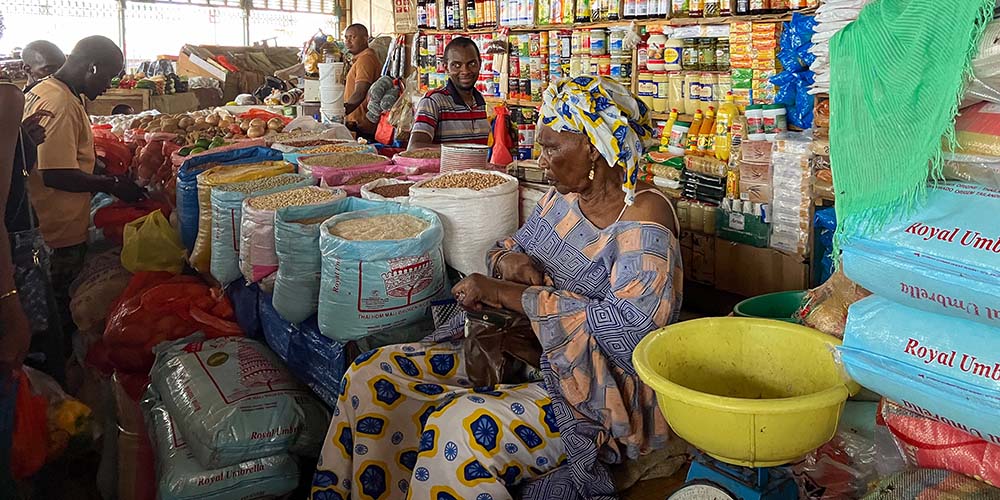
Featured image is of a market in Senegal.
Issue: December 2025