 |
Several world missionary families are transitioning to new locations to further the ministry of the gospel.
In Latin America, Missionary Matthew Behmer and his family recently relocated from Quito, Ecuador, to Mexico City, Mexico. Behmer can now more easily meet regularly with students in the area who have started Grupos Sembrador (church plants) and are teaching others what they have discovered through Academia Cristo courses. Five Grupos Sembrador are in Mexico City, three in Mexico, and more throughout Central America. “What used to require multiple flights and several days of travel can now often be done in a single weekend,” says Behmer.
He continues, “Spending more time in person with our students, sembradores, and groups helps us build trust more quickly. That trust is valuable when we work together on things like outreach plans, preaching and worship planning, or taking steps toward joining Iglesia Cristo WELS Internacional [WELS’ sister synod in Latin America].”
This move is part of a new concept called the “mobile hub,” in which missionaries relocate to new areas but only temporarily—for maybe one or two years. “Having families ready to embrace this idea of a mobile hub allows us to redeploy them to the place that makes the most sense in Latin America,” says Larry Schlomer, WELS World Missions administrator.
Behmer says it has been an adventure for his family to move to one of the largest cities in the world. “We arrived with only suitcases, no shipment of personal items, and looked for furnished housing,” he says. “We talk openly as a family about how the Lord might lead us to do something similar in another country in a couple years.”
Missionary Joel Sutton will join Behmer in Mexico City in early 2026, relocating his family from Paraguay. Two other missionaries—Luis Acosta and Abram Degner—will be redeployed to Ecuador, allowing for easier travel to visit church plants across Latin America.
On the other side of the world, Missionary Mark Zondag has relocated from Chiang Mai, Thailand, to Bangkok, a city of 11 million people where only 1.1 percent identify as Christian. Here he will work to reach out to the native Thai people, an estimated 30 to 40 percent of whom will live in Bangkok at some point in their lives.
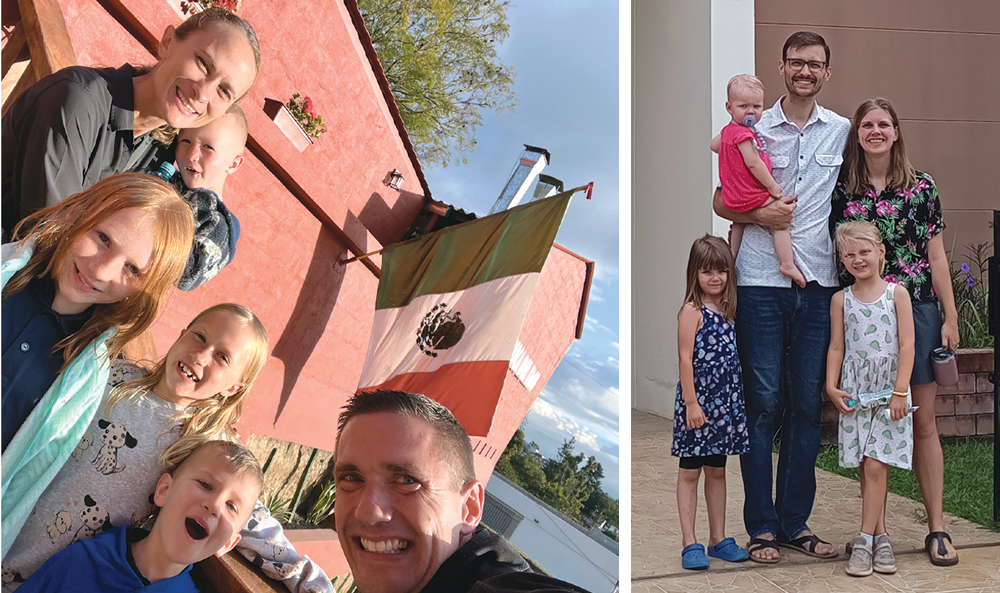
“The transition has felt like moving from the outskirts of Green Bay, Wis., to the outskirts of New York City—more people, faster pace, and more complexity,” writes Zondag. “While much has changed, our mission remains the same: to bring grace to all in Asia-Oceania, including those living in Bangkok.”
In Africa, Missionaries Benjamin Foxen and John Roebke are moving from Zambia to Arusha, Tanzania. This move will allow the One Africa Team not only to help train future church workers in the African Mission Evangelism Church but also to connect with two other Tanzanian church bodies that have shown interest in learning more about WELS and its teachings.
While in Tanzania, both missionaries will be concentrating on learning Swahili, a national language spoken in Tanzania and several other African countries in which WELS works. “If we have missionaries that can teach directly to Swahili speakers without using a translator, that just increases the effectiveness of the teaching and the comprehension of what’s being taught,” says Schlomer.
While moving missionaries can be necessary for kingdom work, Schlomer emphasizes that World Missions understands the difficulties it can cause and works to make it as easy as possible for these families to transition.
Says Behmer, “One of the biggest blessings of serving in world mission fields is the reminder that we are travelers in this life. Moves like this help us remember that our true home is not here, but in heaven.”
Issue: December 2025