 |
Understanding the roles of the Conference of Presidents and the Synodical Council.
The Wisconsin Evangelical Lutheran Synod (WELS) is currently made up of more than 1,200 churches—divided into 12 districts and serving more than 330,000 baptized members—and nearly 400 schools serving infants through higher ministerial education students. Outside the US, WELS’ global network of believers includes more than 300,000 souls across 49 countries. Meeting the spiritual, fiscal, and operational needs of such a church body is no small task.
While the synod has seen different governance structures over the years, WELS is currently governed by two separate but complementary groups: the Conference of Presidents (COP) and the Synodical Council (SC).
To define their roles as simply as possible, WELS President Mark Schroeder says, “The Synodical Council deals primarily with the practical, physical, and financial aspects of the synod’s work, while the COP deals with the spiritual and ministry aspects.”
While there are certainly additional details, nuances, and even areas of overlap, this explanation serves as a solid foundation for an even deeper understanding of the synod’s governance structure.
What is the Conference of Presidents?
“It truly is to serve the church at large,” remarks Charles Westra, president of the South Atlantic District, about the purpose of the Conference of Presidents. “We’ve been entrusted with the pastors and teachers of our district, and it’s a huge responsibility and a gift that God gives to us to serve them.”
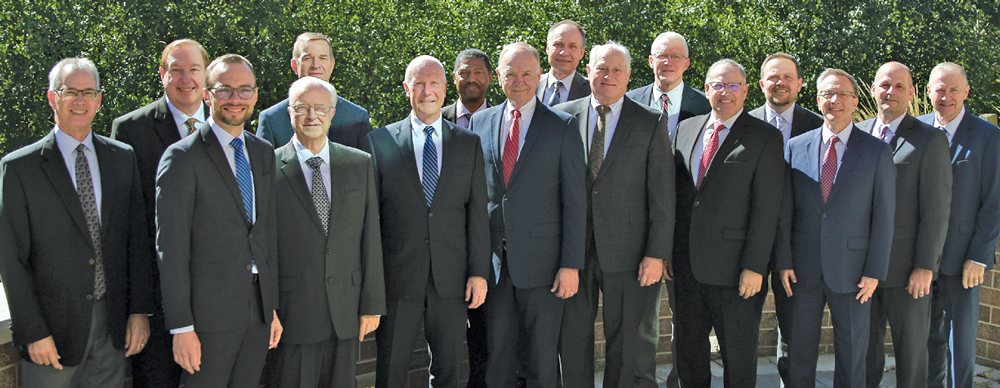
Members of the COP, like Westra, serve the synod in spiritual and ministerial matters to ensure synodical unity in doctrine and practice. To accomplish this, the COP consists of the following members: synod president (chairman), first and second vice presidents, recording secretary (advisory), and 12 district presidents.
The synod president, first and second vice presidents, and recording secretary are elected by the Synod in Convention. The synod president acts as chairman, creating meeting agendas and ensuring COP tasks are carried out faithfully.
Each district president, elected by his respective district, serves as a pastor to the called workers. He supervises doctrine and practice and oversees the district’s calling process. His roles on the district level coincide with his role on the COP, as the group works together to support God’s kingdom at large.
Offering spiritual guidance
Just like a congregation’s Board of Elders oversees its church’s spiritual needs, the COP is primarily responsible for the spiritual needs of the synod. Members of the COP offer spiritual counsel and encouragement to the congregations within their districts to ensure the synod follows and preaches God’s Word and his Word alone.
“We’re there to confer and offer guidance,” says Snowden Sims, president of the Michigan District. “The members in our districts have entrusted us with that responsibility. As a conference of presidents, we’re able to talk with one another and to go over these things, to encourage each other, and to correct one another.”
To provide further spiritual encouragement, the COP works with groups like Communication Services and Congregational Services to communicate effectively the synod’s mission and provide congregations with resources to help carry out their ministries. Publications like Forward in Christ feature synod news, devotions, and topical spiritual articles to connect and support believers across the globe. Each of these areas has the same purpose—sharing God’s grace across nations.
Offering counsel to congregations and called workers is another way the COP strengthens unity in doctrine and practice. It prioritizes the physical and spiritual well-being of called workers and their families and oftentimes works through circuit pastors to address issues between congregations and their called workers. In doing so, the COP mitigates earthly problems to ensure the spiritual health of called workers and congregations.
Supporting the call process
Each district president oversees the calling process in his respective district. He prayerfully provides churches and schools with call lists that fit their needs, whether calling pastors, teachers, or staff ministers, and offers counsel to congregations pertaining to the divine call.
The COP also assigns newly graduated pastors, teachers, and staff ministers, along with vicars, tutors, and emergency teachers. Through prayer and careful deliberation, the group places candidates where their God-given gifts can best serve their church or school.
“It’s . . . easy for us as district presidents to think about our own little kingdoms,” reflects Sims. “But when we get together for assignment days, it’s all about the Lord’s kingdom and what’s best for those congregations that are before us, as well as those individuals who have put themselves up for assignment.”
Working together
While the COP and the Synodical Council are two separate groups with different responsibilities, a few areas overlap, such as the funding of the synod’s ministries. The SC creates and approves the financial ministry plan, allocating the fund amounts for each area. The COP then provides the funding for this ministry plan, working through the Ministry of Christian Giving. Both the COP and the SC maintain confidence in and respect for each other, allowing this governing structure to work efficiently.
Three members of the COP are elected by their peers to serve on the SC. This allows both groups to stay up to date on each group’s responsibilities.
“District president representation on the Synodical Council is a good thing just to make sure they are hearing the perspective of the Conference of Presidents. We Conference of Presidents representatives can then take back [their perspectives] to the COP,” says Westra, who was elected to serve on the SC. “The privilege that I see in working with my fellow called workers and the gifts that God gives to the church for public ministry is a daily encouragement.”
What is the Synodical Council?
Much like congregations have a church council, WELS has a Synodical Council (SC), a group of lay leaders and called workers that oversees the synod’s operations, planning, and budget. Each of the 12 districts elects one lay representative to serve on the SC. WELS President Mark Schroeder explains, “This not only assures broad grassroots input from all across the synod, but it emphasizes that the work of the synod depends highly on our lay members.”
In addition to the 12 lay members representing each of the districts, the SC also includes 3 district presidents (who also serve on the COP), 6 at-large members (elected by the Synod in Convention), and the synod president, who acts as chairman. Together, these men have the responsibility to prayerfully oversee the synod’s operations—from Northwestern Publishing House and World and Home Missions to accounting, human resources, investment funds, and many other areas in between.
Planning, stewarding, and guiding ministry efforts
The SC is dedicated to looking at the big picture: What resources are available, and how should they be allocated? What adjustments can be made to better support the long-range plan? How can WELS faithfully support schools and called workers? “The Synodical Council has the responsibility of planning the overall ministry of the synod,” explains Schroeder. “That includes establishing ministry priorities and determining the level of financial support for them.”
Through everything it does, the SC’s goal is to use the Lord’s gifts wisely to carry out the gospel ministry he’s entrusted to his church. John Fowler, a lay member entering his 12th and final year representing the South Atlantic District, feels blessed to use his unique skill set to help the synod steward its resources wisely. He sums up the group’s responsibility well: “We make decisions and put policies in place so that we can better operate and train pastors, teachers, and staff ministers . . . and so that individual congregations can support their members, spread the Word of God, and expand the kingdom.”
Meeting for business and fellowship
The full Synodical Council typically meets two times each year at the WELS Center for Mission and Ministry. Topics covered during the meetings may include things like the synod’s long-range plan, reports from WELS subsidiaries like WELS Foundation or Northwestern Publishing House, changes to called worker compensation, reports from Home and World Missions, and much more.
After a group devotion on Friday morning, the council walks through its agenda for the day before breaking into committees to complete more detailed tasks. Friday evening, the men enjoy a fellowship dinner, during which they get to know one another better as individuals and forge relationships—many of which have grown into long-standing friendships. On Saturday morning, the council convenes once again to share the progress made during committee meetings and make final decisions.
For many of the SC members, the fellowship they share during their brief time together leaves them feeling encouraged and spiritually uplifted. “When you sit at the airport flying home on Saturday, you are so fired up for the gospel because you see other people—pastors and laypeople—doing great, great things,” says Fowler. “It just encourages you to do more.”
Empowering strong lay leaders
The laymen serving on the Synodical Council—representing fields such as health care, insurance, sales, technology, finance, and beyond—contribute essential knowledge and skill sets to the synod’s operations. “Our synod doesn’t just entrust leadership to called workers. It also relies heavily on faithful laymen who know what it’s like to manage a family, run a business, and serve in the congregation,” explains Kyle Egan, WELS chief financial officer. “Their vocational wisdom brings valuable perspective to the table—they ask thoughtful questions, challenge assumptions, and strengthen the Synodical Council’s ability to oversee the work and operations of the synod with both care and competence.”
The Synodical Council, with its mix of laypeople and called workers, reflects one of the synod’s greatest strengths: God’s people working together for the good of his church. As they serve in various capacities across the synod, lay leaders bring business and leadership skills, and called workers bring deep knowledge of God’s Word and the synod’s ministry needs. Together, they use their unique gifts to serve a common purpose—the advancement of God’s kingdom.
Conference of Presidents at a glance
Members: Synod president (chairman), first and second vice presidents, recording secretary (advisory), and all 12 district presidents
Purpose: Strengthen and maintain the synodical unity of doctrine and practice
Committees: Doctrine, Congregations, Called Worker
Responsibilities: Oversee all matters relating to doctrine and practice, assist congregations in the calling process, ensure the well-being of congregations and called workers, and provide funding for the ministry plan approved by the Synodical Council and the Synod in Convention
Reporting areas: Ministry of Christian Giving, Communication Services, Congregational Services, Commission on Inter-Church Relations, Support Committee, Publication Review Committee, Colloquium Committee, Committee on Constitutional Matters
Members of the Conference of Presidents:
Rev. Mark Schroeder, WELS president and chairman
Rev. Joel Voss, WELS first vice president
Rev. John Bortulin, WELS second vice president
Rev. Douglas Free, Dakota-Montana District president
Rev. Joel Heckendorf, Arizona-California District president
Rev. Philip Hirsch, Nebraska District president
Rev. Michael Jensen, Western Wisconsin District president
Rev. Dennis Klatt, Minnesota District president
Rev. Daniel Lange, Pacific Northwest District president
Rev. Daniel Leyrer, Southeastern Wisconsin District president
Rev. Donald Patterson, South Central District president
Rev. Michael Seifert, North Atlantic District president
Rev. Snowden Sims, Michigan District president
Rev. Charles Westra, South Atlantic District president
Rev. Joel Zank, Northern Wisconsin District president
Advisory
Rev. Tyler Peil, WELS recording secretary
Synodical Council at a glance
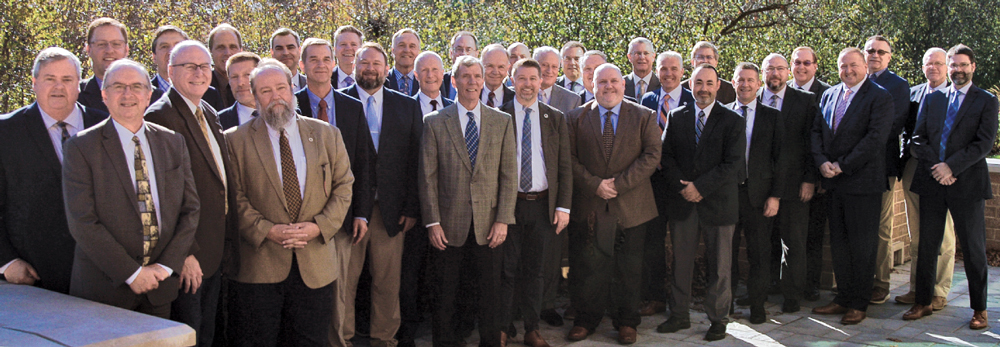
Members: Synod president (chairman), 12 lay members; 3 district presidents elected by the Conference of Presidents; 6 at-large members, elected by the Synod in Convention (two pastors, a male teacher, and three area of ministry chairmen)
Purpose: Oversee the operational, financial, and legal activities of the synod as determined by the Synod in Convention
Standing committees: Finance, Ministry, and Administration
Responsibilities: Plan and oversee the synod’s financial plan; make decisions about legal and property matters, including purchases, sales, or construction of synod-owned facilities; approve capital projects; monitor the performance of synod investments; ensure that offerings and gifts are handled appropriately
Reporting areas: Accounting Oversight Committee, WELS Archives, Board for Home Missions, Board for World Missions, Board for Ministerial Education, WELS Christian Aid and Relief, Northwestern Publishing House, WELS Church Extension Fund, WELS Foundation, WELS Investment Funds, WELS Retirement Program Commission, WELS Voluntary Employees’ Beneficiary Association Commission, WELS Historical Institute
Members of the Synodical Council:
Rev. Mark Schroeder, WELS President and chairman
Mr. Pete Aisbet, Southeastern Wisconsin District
Rev. Jonathan Bauer, pastor-at-large
Rev. Bart Brauer, pastor-at-large
Rev. Matthew Brown, chairman of WELS Board for Home Missions
Mr. John Fowler, South Atlantic District
Mr. Seth Hansen, Dakota-Montana District
Rev. Philip Hirsch, Conference of Presidents
Mr. Chris Kestner, Michigan District
Mr. Noel Ledermann, Arizona-California District
Mr. Tim Lehman, Northern Wisconsin District
Mr. Jake Lemke, Western Wisconsin District
Mr. Brent Masters, Pacific Northwest District
Mr. Brent Nemmers, South Central District
Dr. Ryan Olson, North Atlantic District
Teacher Thomas Plitzuweit, teacher-at-large
Rev. Duane Rodewald, chairman and acting administrator of WELS Board for Ministerial Education
Mr. Kurt Sames, Minnesota District
Rev. Jonathan Schroeder, chairman of WELS Board for World Missions
Rev. Charles Westra, Conference of Presidents
Mr. Chip Woods, Nebraska District
Rev. Joel Zank, Conference of Presidents
Advisory
Mr. Kyle Egan, WELS chief financial officer and treasurer
Rev. Mark Gabb, administrator of WELS Board for Home Missions
Rev. Jonathan Hein, coordinator of WELS Congregational Services
Rev. Joel Voss, WELS first vice president
Rev. Kurt Lueneburg, director of WELS Ministry of Christian Giving
Mr. Dennis Maurer, director of WELS Human Resources
Mr. Dan Nommensen, director of WELS Communication Services
Teacher Jim Rademan, associate coordinator of WELS Congregational Services
Rev. Larry M. Schlomer, administrator of WELS Board for World Missions
Mr. Martin Spriggs, WELS chief technology officer
Rev. John Bortulin, WELS second vice president (serves as the secretary of the Synodical Council)
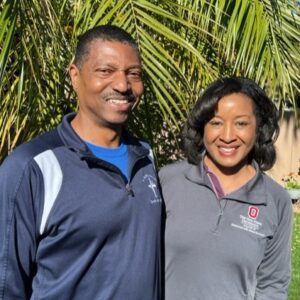
Meet a member of the Conference of Presidents: Snowden Sims
Hometown: Lima, Ohio
Congregation: Pastor at Saint Paul’s, Columbus, Ohio, since 2009
Synodical roles: Michigan District president and member of the COP since 2018. He also serves on the Doctrine Committee, the Steering Committee for the synod convention, and has been writing for Forward in Christ since 2020.
Sims has a passion for serving his congregation, district, and synod. God continues to bless his varied ministry—from being assigned as a tutor at Northwestern Prep to later called as dean of students at the newly-formed Luther Prep to serving as a parish pastor and Michigan District president. He says, “One of the biggest blessings is being surrounded by a group of brothers who work well together, who use their collective wisdom to keep the kingdom at large in view.”
Sims enjoys diving into God’s Word on the COP’s Doctrine Committee and serving with the other district presidents.
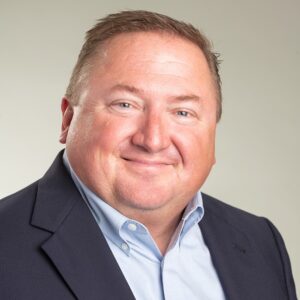
Meet a member of the Synodical Council: John Fowler
Hometown: Franklin, Tenn.
Congregation: Christ Our Savior, Columbia, Tenn.
Synodical roles: South Atlantic District lay representative to the Synodical Council (11 years) and current chairman of the Finance Committee
Fowler brings a wealth of experience not only from a church leadership standpoint but from his distinguished career at STERIS Corporation. As he enters his 12th and final year serving on Synodical Council, Fowler feels blessed to use his unique skill set to help the synod steward its resources wisely. “Our job is to make sure that we make financially sound decisions to support today and to expand in the future,” he explains.
Raised Presbyterian, Fowler wasn’t introduced to WELS until he met his wife, Sarah. Over the years, the synod’s commitment to biblical truth motivates him to continue serving. For Fowler, one of the most powerful moments of the Synodical Council’s in-person time together is when they sing a capella before parting ways. “It’s so encouraging to hear these guys next to you singing hymns, and you go, Wow, this is powerful,” says Fowler. “That’s what hits me when I leave. That’s what I think about.”
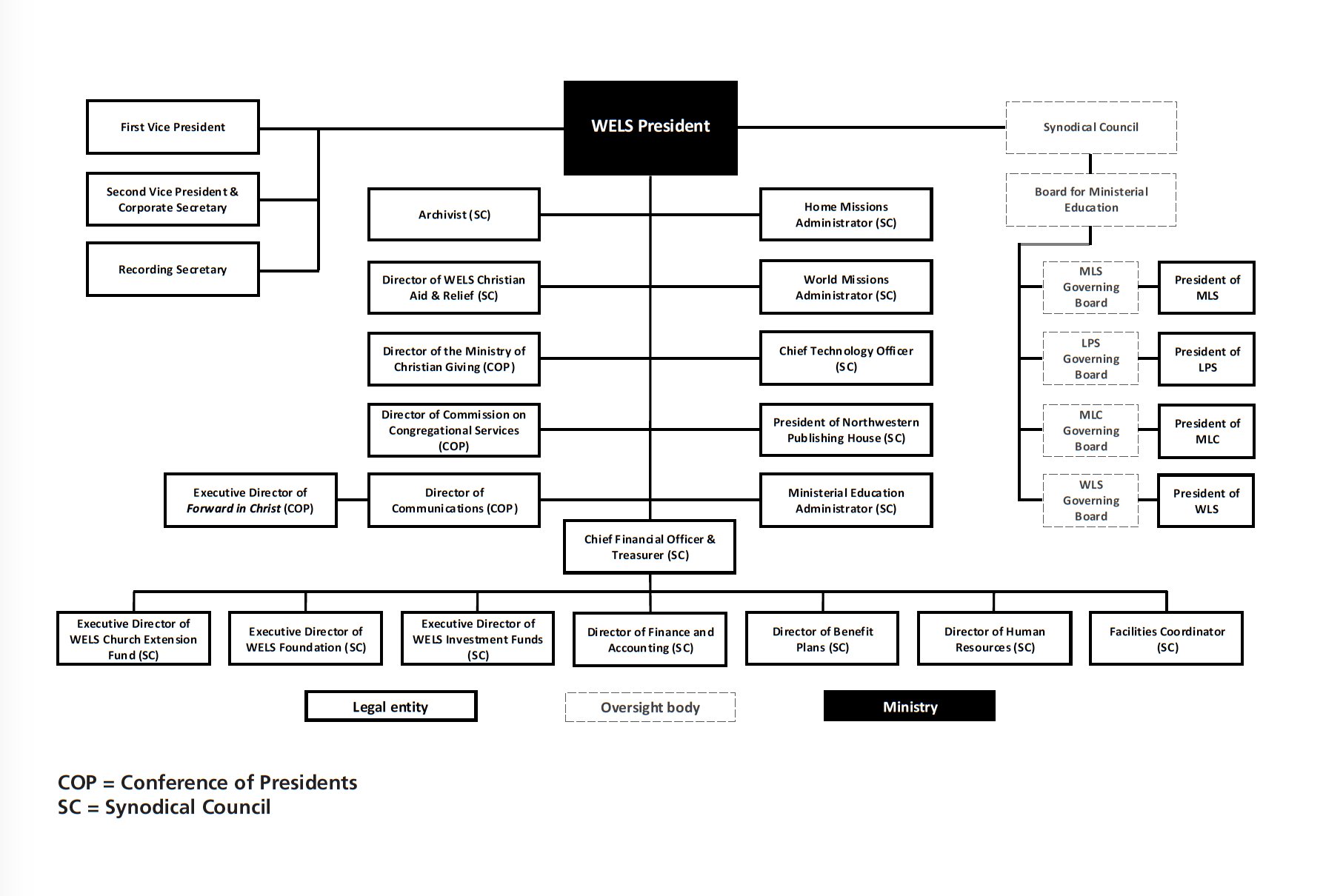
WELS organizational chart
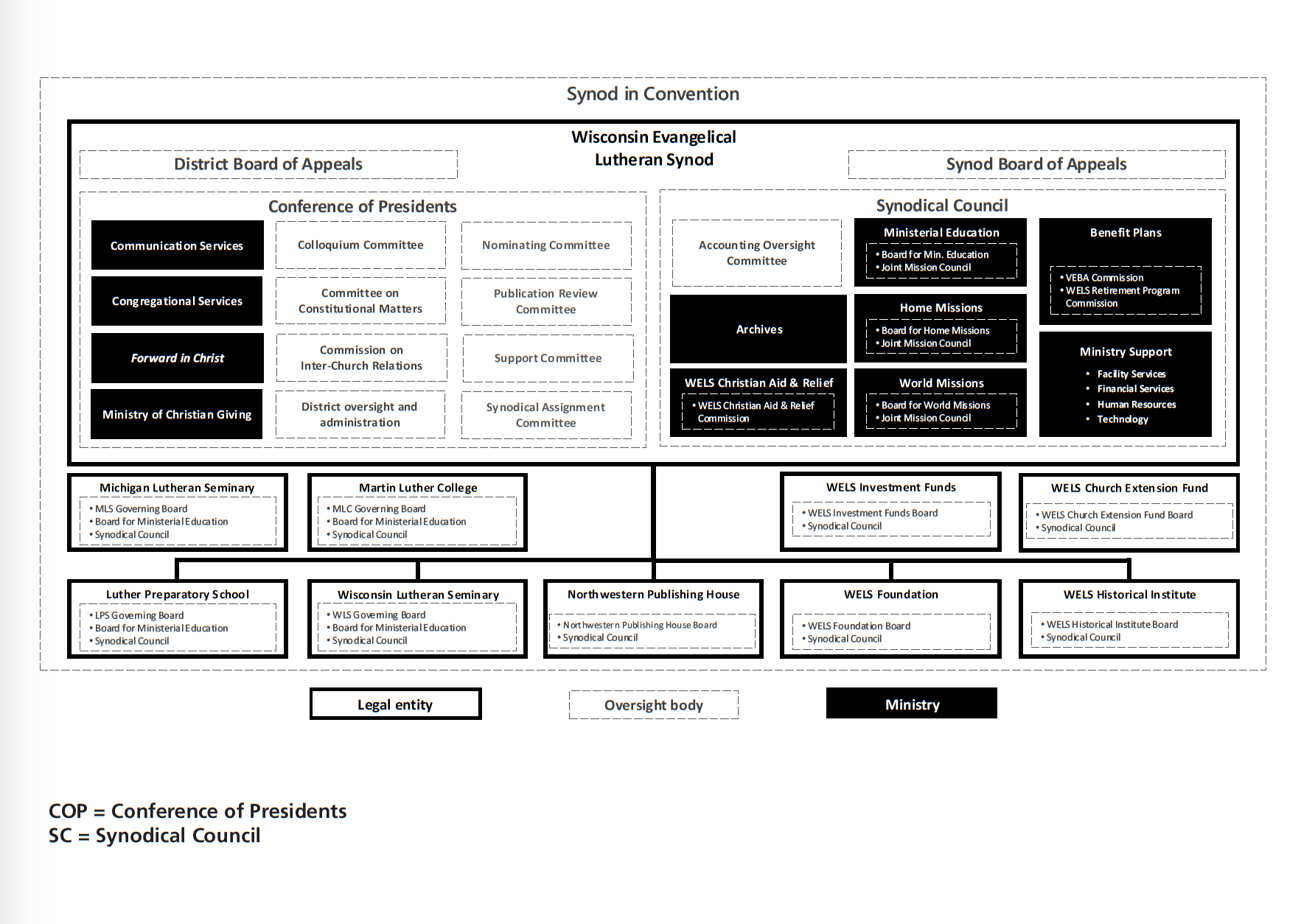
Author: Multiple authors
Volume 112, Number 09
Issue: September 2025