 |
When historic flooding hit the New London, Wis., area in mid-April, it was all hands on deck at Emanuel, New London. Although the church wasn’t damaged, at least 20 member families were directly affected as well as thousands of people in the community.
“As a congregation, we have 2,000 members in a town of 7,600, so we’re connected with a lot of people,” says Mark Tiefel, pastor at Emanuel. “As the biggest church in town, we wanted to find a way to respond effectively.”
Flooding wreaked havoc in multiple ways in the community. Those in the flood zone were evacuated from their homes. Thousands were without gas for multiple days. Homes were filled with up to five feet of water; possessions were damaged or destroyed. Bridges that connected the north and south sides of the city were closed and roads were flooded, leaving people cut off from vital resources.
Members at Emanuel quickly mobilized, first calling local hotels to help subsidize the cost for members and nonmembers who were evacuated from their homes. Then volunteers, including children from the school, helped with sandbagging to protect homes and businesses being threatened by the rising Wolf River.
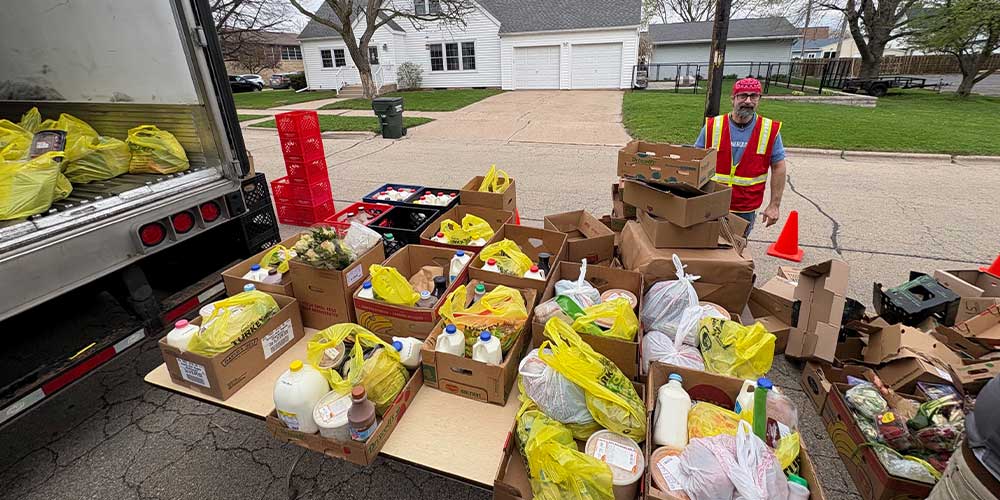
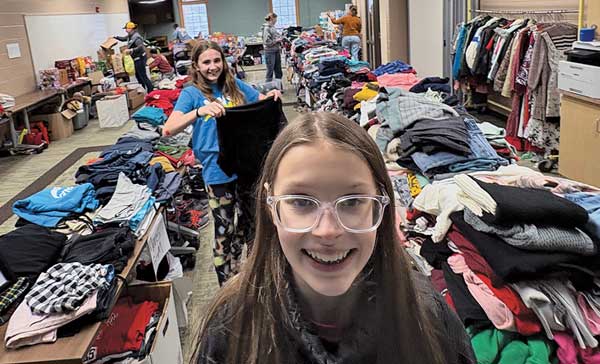
“We were contacted by the Chamber of Commerce on behalf of the city to serve as a disaster relief distribution center, because we are one of the larger organizations on the south side of town,” says Tiefel. “Within about 30 minutes, we recalibrated some of our building space and became the place to go for anybody who needed clothes, food, equipment, supplies, and paper products.”
Donations from the community—“not carts’ worth, but pallets’ worth,” says Tiefel—began pouring in. What started as a couple of tables grew to several rooms filled with donated goods.
“We kept joking that it was like manna from heaven,” says Scarlett Berg, Emanuel’s business administrator. “Supplies would get low, and the next day something else would show up to take its place.”
From 150 to 200 people visited daily to pick up what they needed, but they gained more than goods. “There were a lot of hugs given. Lots of hugs and tears,” says Berg. “People needed that—just someone to listen and look at the pictures they had on their phones of their homes.”
Besides manning the disaster relief center, Emanuel volunteers also helped with community clean-up, including delivering by boat three pumps provided by WELS Christian Aid and Relief to the neighboring community of Fremont.
“There were so many God opportunities,” says Jack Vande Guchte, staff minister at Emanuel. “With people donating, people needing help, people coming in to volunteer, there were so many different directions that you could see God working and weaving people together.”
Those connections gave Emanuel’s members an opportunity to be a light in the community. “Being a part of a church is also being part of a community, but how do you do that well?” says Tiefel. “This is a really cool way that we can just be who we are.”
Berg agrees. “We need to be involved and help others. God calls us to do that. You just don’t realize how much it’s helping and what it’s doing for people. But you’re not thinking about it because it’s just something you do. We say it’s every day in the life of Emanuel.”
Issue: June 2026
Have a plan
After going through this experience, Mark Tiefel says the one thing he would encourage other congregations to do is to have a plan. “Think through your congregation’s disaster response ahead of time,” he says. “You can do some very simple congregational response planning just so that you don’t have to figure it out while you’re mid-crisis.”
WELS Christian Aid and Relief has resources to help, including information on how to work with and manage volunteers, lists of organizations to partner with, and additional disaster helps.
Learn more at wels.net/disaster.