 |
At the end of each school year, the call day worship services at Martin Luther College (MLC), New Ulm, Minn., and Wisconsin Lutheran Seminary (WLS), Mequon, Wis., are a very public forum showing the culmination of years of preparation for the full-time ministry. What isn’t as public or as well-known is the process that led to the assignments that are read during those services.
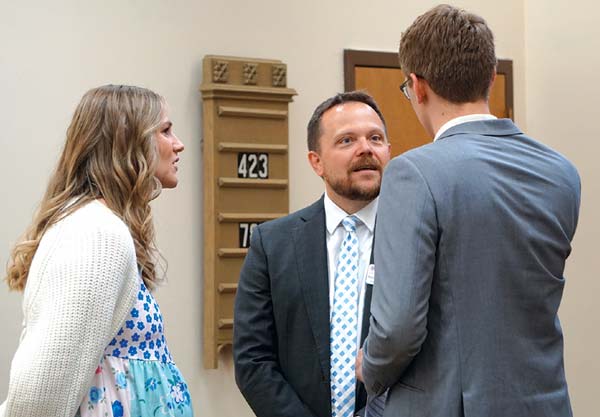
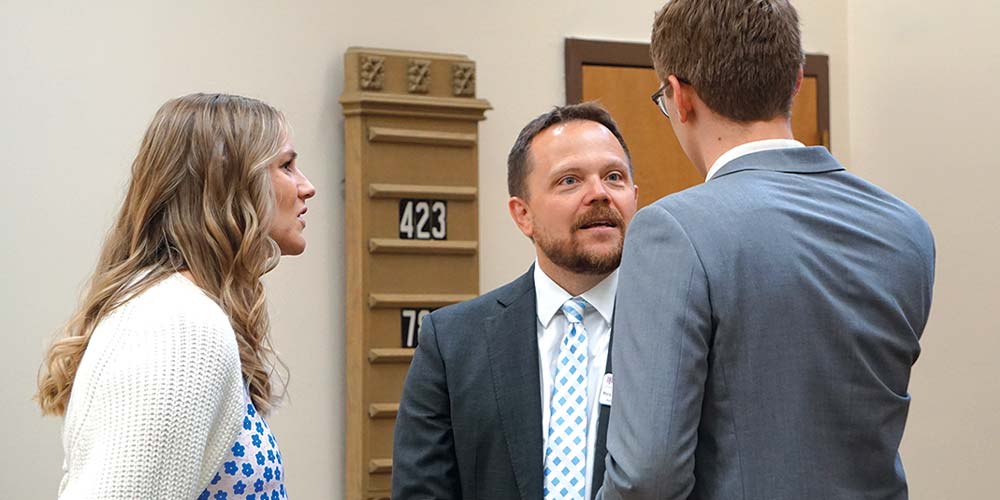
The WELS Constitution and Bylaws delegates the role of Assignment Committee to the Conference of Presidents, which is made up of the 12 district presidents as well as the synod president, first vice president, and second vice president. The Assignment Committee begins its work weeks in advance of the call services. As Michael Seifert, North Atlantic District president, explains, “Each district president is responsible for prioritizing the requests for candidates in his district. Before the Assignment Committee meets, I consider factors such as length of vacancy, availability of vacancy pastors, and congregational health. That gives me a rough idea of the order in which I’ll seek to fill requests. Once we start assigning candidates, however, other factors come into play, such as how well the remaining candidates fit my remaining requests and how well they fit the requests that other districts bring.”
The schools help the Assignment Committee prepare by gathering information about the candidates. Earle Treptow, WLS president, interviews each student, and if the student is married, Treptow conducts another interview with the student and his wife. Along with these interviews, all members of the seminary faculty offer insights about the student that become part of what is known as the student’s characterization. These characterizations are then passed on to the Assignment Committee. A similar process takes place at Martin Luther College.
“Most of my homework time is spent on getting to know the candidates,” says Seifert. “This spring the biographies and characterizations of candidates from MLC and WLS totaled more than 500 pages. I take notes on my tablet as I read. I also make spreadsheets and list candidates under potential placements.”
Seifert also notes that the district presidents and advisors confer by email and teleconferences ahead of the face-to-face meetings. “This pre-work helps us to come into the meetings with a solid understanding of our individual districts, the needs across the synod, and the candidates who are offering themselves for the public ministry,” says Seifert.
The Assignment Committee’s face-to-face meetings take place days before the call services on each school’s campus. “The district presidents present their greatest needs and the candidates they’ve identified for them,” says Seifert. “From there we work together to place the candidates in a way that maximizes their gifts, meets the needs of churches and schools, and serves the synod at large.”
John Bortulin, WELS’ second vice president, attended his first Assignment Committee meetings this May. He was overwhelmed by “the overarching care that is given to each individual and to each assignment. From the school side: The advisors from MLC and WLS know and love these students to the nth degree. From the Conference of Presidents’ side: They know their congregations and schools and want what is best for them, while being mindful of what is good for the kingdom at large.”
Richard Gurgel, MLC president, notes, “Our ultimate trust is not in the Assignment Committee, but in Christ who remains the Lord of his church, yet it is very encouraging to see the love and care the members of the committee put into each assignment.”
Of course, the Assignment Committee must also wrestle with the realities of the current vacancy situation. “We’re in a season when requests outnumber our pool of candidates by more than two to one,” reports Seifert. “Even though there is a compelling need behind every request, most will go unfilled.” This year, 110 teacher vacancies and 128 pastor vacancies remained after call day.
Yet Seifert adds, “Even during a time when we talk so much about called worker shortages, it’s a joy to see so many of our young people aspire to the noble task of the public ministry. This year alone, about 150 graduates raised their hands and said, ‘Here am I. Send me!’ It’s remarkable that anyone offers themselves so selflessly, but 150 in a single year is a miracle of God’s Spirit!”
As Bortulin notes, “These days on the New Ulm and Mequon campuses are a highlight of the year—and well they should be! When God gives good gifts, how appropriate that we respond with thankful hearts and lives.”
Issue: July 2026