|
A father answers his teenage daughter’s question, “Why am I still here?”
“Why am I still here?”
I didn’t expect the question, but I had already been thinking about the answer.
A question asked
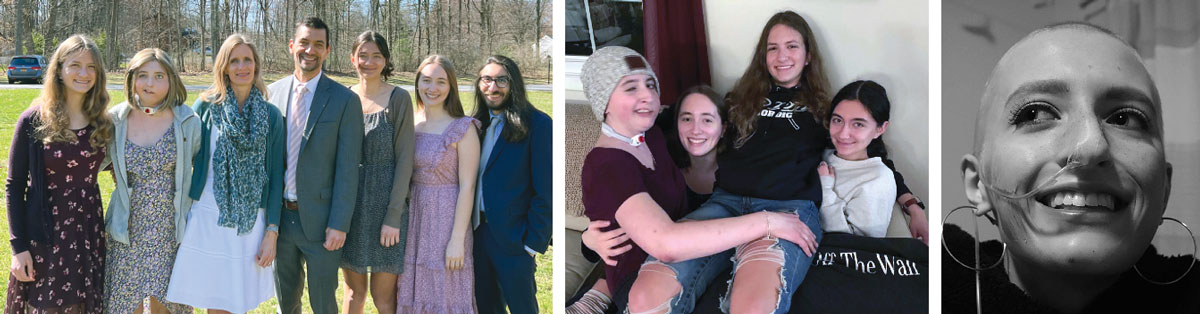
It was a pleasant day, the traffic was light, and I was driving my 19-year-old daughter, Yeva, to another appointment at the hospital. She had been fighting a battle with cancer for three years, and she was losing. The cancer had returned, it had spread, and the treatments weren’t working. In January, the doctors estimated she had weeks to live, and now it was March.
The disease, or maybe the treatments, had affected her entire body. This person who used to sing in the church choir now had difficulty talking; most people had difficulty understanding her. This person who used to run track, who once ran a half-marathon, now had an awkward gait and needed help just to walk around the block. Her body was failing her, and she required machinery to keep her breathing when she slept. We were continuously managing pain and her condition.
But Yeva was still here. She was amazing. She loved her family. She loved her friends. And she loved God. And they loved her back. Although she was dying, she brought life to every room she entered. At age 19, she had endured tremendous pain, struggle, and disability; she had reached a point where it was a continuous challenge just to participate in routine daily activities. At this moment, she was asking obvious questions: “Why am I still here? What is my purpose? What does God want from me?” She wasn’t sad, depressed, or downtrodden. She was thoughtful and determined to complete as much as she could with the time she had.
A question examined
God has much to say about our purpose, including that we have more than one purpose. He didn’t just create us and roll the dice to see how we would turn out. He gave guidance and instruction in his Word that are relevant to all of us at every stage of life.
In Genesis 2:15, God gave Adam a job: taking care of the Garden of Eden. Could God have created the garden to sustain itself? Absolutely. But instead, even before sin came into the world, Adam was given this job. Productive work isn’t a punishment for sin but, rather, a blessing from God.
My daughter, despite her illness and disability, held a job at a grocery store. She found great joy in being productive and useful, especially given the physical challenges she faced daily. Working at the store allowed her to be around people, something she truly loved. Her ability to find purpose and happiness in her work, despite her pain, is a testament to the resilience and strength that comes from doing the work that God has given us to do (Ecclesiastes 2:24).
In Ephesians 2:10, we read that “we are God’s handiwork, created in Christ Jesus to do good works, which God prepared in advance for us to do.” What are those good works? These opportunities are sprinkled throughout our lives. Sometimes they’re obvious, like helping our sick child, and sometimes we need to look harder for them, like checking in on an elderly neighbor who hasn’t asked for help. In Matthew 25:35,36, Jesus explains that at the judgment, believers will be commended for helping those who were hungry, thirsty, sick, or unknown to them. So another purpose we’re given is to be charitable.
But if we’re meant to help people throughout our lives, that also means that sometimes we need to be the people who are helped. How can others be charitable if we aren’t willing to accept charity? Jesus, and his apostles after him, received the goodwill of others, and we need to be open to accepting the generosity of others as well as to being generous ourselves.
Maybe her purpose at this point in her life, so weak and so near to death, was just to share her faith with those around her.
The types of work and the types of charity that we perform will vary from person to person throughout our lives. In 1 Corinthians chapter 12, we read that we are all members of one body, but we are not all the same. We have different abilities, different characteristics, different callings in life, and different purposes. But God prepared good works in advance for each of us personally. The things he prepared in advance for me to do are different from the things he prepared in advance for you to do, and I need to search for them, overcome my fears or reservations, and do those things that God has called me to do.
What other instruction does God give regarding our purpose? Matthew 28:19,20 instructs us to spread the Word of God throughout the world. First Peter 3:15 further instructs us to be prepared always to discuss our faith. How do we do this? We need to study God’s Word regularly and meditate on what it means for us in our lives. We need to share our faith with the people he puts in our lives.
A question answered
In the parable of the talents, Jesus describes what happens at the judgment. Will we squander our opportunities by making excuses like being too young, too inexperienced, too weak, or too old? Or will we instead use the opportunities he has prepared for us to work, to be charitable, and to spread his Word?
Samson was called to battle the Philistines throughout his life. Although he had superhuman strength, in his final days he was weak, blind, and chained up in a public area to be abused and ridiculed. In this state of fragility, Samson prayed to God for the strength to do God’s will one last time. In Samson’s final days, in his handicapped state where he finally recognized his own powerlessness, he fulfilled his calling from God and brought judgment on the Philistines.
So how did I answer my daughter in her final days, in her handicapped state, when she asked, “Why am I still here?” I told her that I didn’t know for sure what God had in mind for her, but, although she would find it hard to believe, most people who knew her looked up to her like a hero. In the face of so many challenges, she soldiered on and remained strong and upbeat, always caring for other people. I told her that she was in a unique position where people would listen to what she had to say and treat her words with particular reverence. Maybe her purpose at this point in her life, so weak and so near to death, was just to share her faith with those around her. And maybe, with God’s help, she could bring the good news to the people God put in her life.
A question to consider
We are all dying from the moment we are born—some of us just have a more immediate awareness of it. So what will we decide to do with the time we have remaining? My daughter spent her remaining days on this earth studying God’s Word, sharing her faith with her friends and family, being charitable, and accepting charity.
So whatever your position in life, whether you’re a young person still trying to find your place in the world, a middle-aged person wondering what you’re doing it all for, or near the end of your life questioning why you’re even still here, I pray that you recognize that God has plans for you. I pray that you meditate on his Word and continue to search for the purposes he has laid out for you. What will you do with the time you have remaining?
Just never forget that he promises to be with you. “Have I not commanded you? Be strong and courageous. Do not be afraid; do not be discouraged, for the LORD your God will be with you wherever you go” (Joshua 1:9).
Author: Dr. Adam Klingbeil
Volume 112, Number 08
Issue: August 2025
Running the race
Yeva had several passions, including photography and baking. She also was an avid runner. She excelled at track & field and cross country and even ran a half marathon with her dad. But in the spring of 2019, when she was a sophomore in high school, she started having pain in her jaw. In November of that year, Yeva was diagnosed with rhabdomyosarcoma, a rare type of cancer that affects the muscle tissue.
 The disease and the subsequent treatments put an end to her track career, impairing her muscle control and leaving her so weak that she could barely walk around the block. Yet her track team supported her throughout. Yeva made national news in 2021 when she participated in her high school’s tradition of seniors running the 4×100 at the final home track meet. Despite receiving chemotherapy earlier in the day, she completed the final leg—with her teammates walking beside and supporting her.
In a news story on ABC’s World News Tonight, Yeva said, “It felt great having them there; supporting me was really nice. I hope everyone gets the same sense of inspiration that I did. And feels hope and knows that they can cross that finish line no matter what.”
Yeva passed away at home on April 22, 2023, a little over three years after she was diagnosed. Her obituary stated, “She is a firm believer in Jesus Christ as her Savior and attended church at King of Kings Lutheran Church in Clifton Park, where she was a member.”
“I have fought the good fight, I have finished the race, I have kept the faith. Now there is in store for me the crown of righteousness” (2 Timothy 4:7).