 |
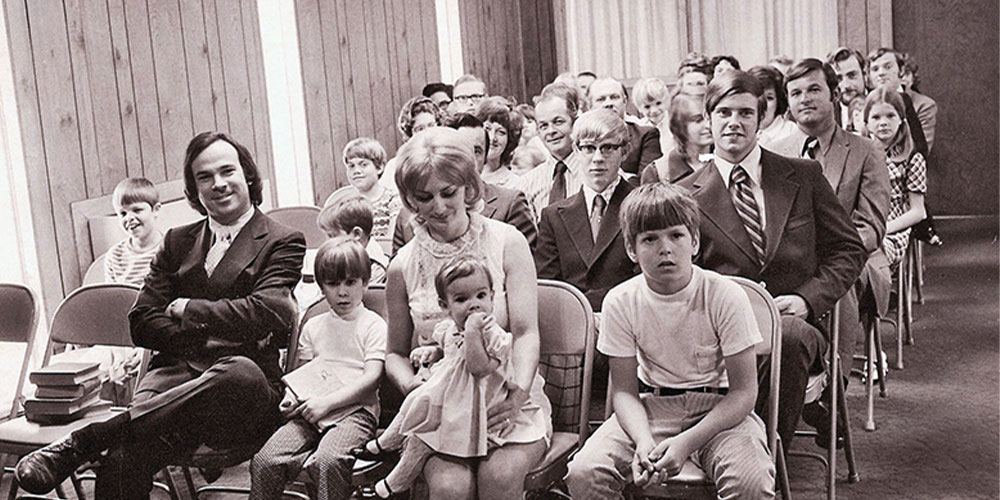
For more than 55 years, Abiding Word has been proclaiming God’s Word in the northwest part of Houston, Texas. Starting as a mission church with two families in 1969, the church has grown, changed, and adapted through the decades (read more in Mark Gabb’s article). Its history tells a story of God and his grace.
Every congregation has its own history, its own stories of blessings and challenges as it reaches out with God’s Word.
That history—and the secular events surrounding it—provides context as new directions are forged in a congregation, according to Susan Willems, synod archivist. “You cannot know where you’re going until you know where you’ve been,” she says. “I know that sounds cliché, but when you look back at church records, you can see patterns in what you tried to do as a congregation. If you don’t understand what your congregation has tried before, you’re just going to repeat those cycles.”
While different things may work at different times in a church’s history, according to Willems, tracing and understanding that history may provide hints about what has shaped a congregation’s culture and how that might affect future decisions.
But it’s really not enough just for church leaders to know about their congregation’s history. Preserving that history and documenting it for future generations offers benefits to members and nonmembers alike.
“[Understanding a church’s history] gives new members a sense of belonging,” says Willems. “They’re a part of something that has lasted, that’s adapted and changed through events in American and world history. I think it really just provides people with a sense of identity in their congregation.”
A congregation’s history can be told in multiple ways. Whether written facts in a printed booklet, video interviews with longtime members, or an online interactive timeline of important dates and events, all methods can preserve important information about God’s work and God’s people.
Says Willems, “The way you choose to preserve your congregation’s history isn’t as important as just taking the time to preserve it and to tell it.”

Learn more about preserving and sharing your congregation’s history at a presentation at the Lutheran Leadership Conference Jan. 19–21, 2026. Visit lutheranleadership.com.
Preserving your church’s history
Putting together a congregational history can sound daunting. Here are some examples of ways others have put together their story.
- St. John’s on the Hillside put together an online pictorial timeline showing its more than 175 years in the Milwaukee area. Check out stjohnshillside.org/our-history.
- St. Paul, Plymouth, Neb., added a written history, narrating one hundred years of preaching God’s Word in its community. Read it at stpaulsplymouth.org.
- Want to start simple? St. Matthew, Marathon, Wis., included a list of dates, events, and people in the congregation’s histroy. Visit stmatthewmarathon.org/page/history.
More information on writing a congregational history can be found on the WELS Historical Institute website, welshistoricalinstitute.org/histories. You can also contact the synod archivist at [email protected].
Issue: October 2025