 |
Navajo and Christian. A Native American relates how he lives his life and shares his faith in two distinct worlds.
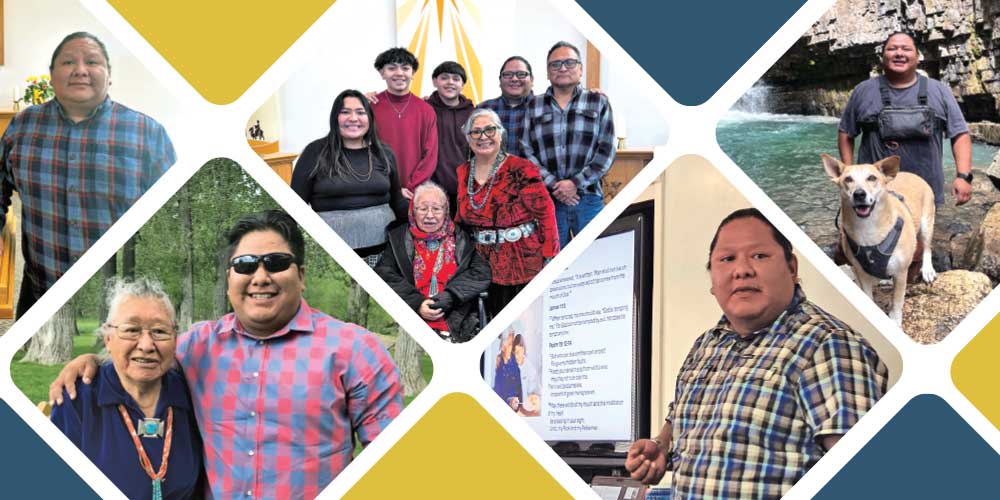
Caught in the middle—that’s where Aaron Newman finds himself each day.
Aaron is Navajo. Aaron is also Christian. By being both, he has one foot in two distinct worlds.
Growing up Navajo and Christian
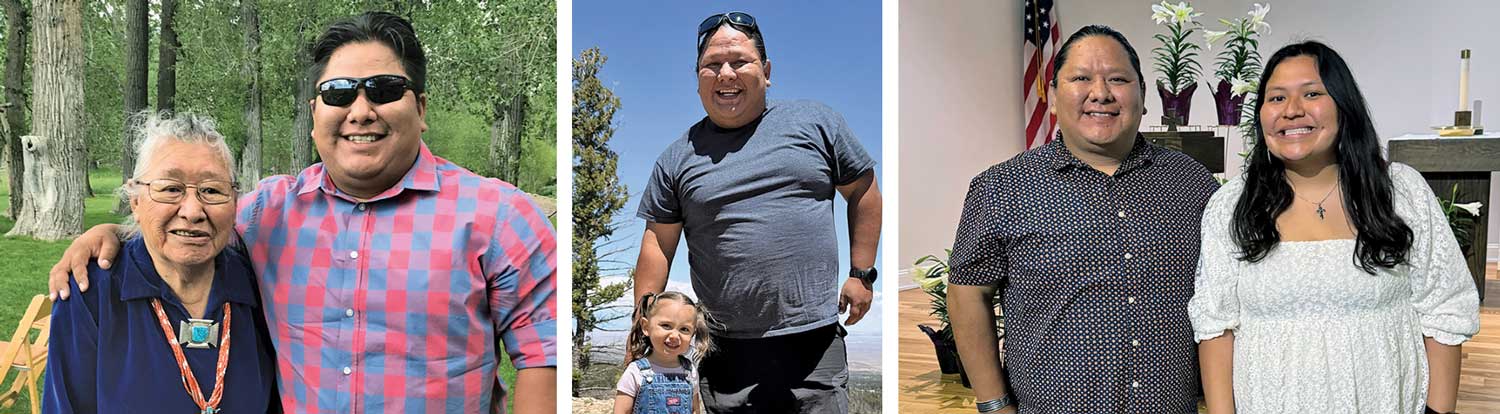
From little on, Aaron was raised and educated in the Navajo way of life. In some of his earliest memories, he’s looking out the car window as his family traveled to visit his grandparents’ homestead in the Chuska Mountains. There, his grandparents worked as sheep herders and lived without electricity or running water. Aaron; his sister, Mare; his father, Robert; and his mother, Myra, would pitch in alongside their family to help his grandparents, chopping wood, hauling water, and tending the sheep. The family also cared for Aaron’s great-grandmother Mary, who lived to be 110 years old.
While spending time with his extended family, Aaron remembers participating in traditional Navajo ceremonies, often involving a medicine man who was believed to be able to cure illnesses and fend off evil spirits. Aaron says that these ceremonies “made me aware of how much I needed Jesus.” Even at a young age, he experienced the conflict between his Navajo heritage and the faith that was already an important part of his life.
“Navajo and other tribal influences surrounded us,” says Myra. “I am most grateful that Jesus kept us from all the harm that could have taken us down a different path, a path that does not, nor would not, take us to heaven.”
On his grandparents’ homestead, the core values of Navajo culture were instilled in him—the importance of community, prioritizing family, working hard, and respecting one’s elders. Aaron remarks, “Learning from an early age the importance of supporting and serving elders is the greatest value I hold to this day.”
Yet Aaron’s elders are unique among his local Navajo community. His grandmother Marian and his grandfather Arthur brought up their family in the Christian faith, rather than traditional Navajo spiritual practices, and his parents connected them with the local WELS church.
As Aaron wrestled with the two distinct and essential parts of his identity, it was his family who planted in him an unshakable confidence in God. He recalls his grandparents singing along with the local gospel radio station when he was growing up and reflects on the lasting spiritual influence his family had on him: “My mother and I would pray before bed and would read a children’s Bible that was a pop-up book. Jesus was, and still is, our focus for strength, comfort, and guidance.”
Serving Christ and the community
Aaron was confirmed just before graduating high school and joining the Marines. Upon completing his military service, he took a job working as the coordinator for the local senior center, organizing meals and activities for the residents, but he soon realized he needed a change. While he enjoyed working with the elders in his community, he longed for a more meaningful avenue to interact with them.
“I prayed and trusted the Lord to provide a new opportunity,” says Aaron, and God answered his prayer. Aaron was offered a job as an elder advocate at the Family Crisis Center in his hometown of Farmington, N.M.
In his line of work, he has the opportunity to help people in his community, particularly elders, who are victims of abuse or exploitation. He offers group counseling services in domestic violence prevention. He also works directly with people whom the court appoints for abuse intervention services, helping them to reform their actions and become leaders.
While it’s difficult for Aaron to witness firsthand the devastating effects of abuse on families in his community, he remains passionate about helping people in need. “I have the opportunity to serve others and have an impact on my community,” he says. Even more so, he views his work as a chance to witness his faith and share the love of Christ with the lost. “My faith gives me guidance, strength, compassion, purpose, and hope to serve others who are hurting,” says Aaron.
Aaron also uses his gifts at his church, Christ the Rock, assisting with Communion distribution and leading worship and Bible study on Sundays when Jon Brohn, pastor at Christ the Rock, is away. “He also offers a wealth of information when it comes to Navajo culture, giving background to different religious practices in the Navajo community,” says Brohn.
Aaron’s unique perspective is a valuable asset to the work being done by Christ the Rock and the WELS Native Christians team (see “Reaching Native Americans” below). “For the last several years, my home church in Farmington has been working with our brothers and sisters on the Apache reservation to learn from each other how to best serve Navajo and Apache communities,” says Aaron. He’s given presentations about his experiences as a Navajo Christian in hopes that he can provide insight that helps reach more people with the gospel.
“Since Aaron is Navajo, he and his family have been very helpful and supportive of my work to reach out to additional Native American communities,” says Nathan Wagenknecht, who serves as the outreach counselor on the Native Christians team. “They provide insights into Native culture, history, and unique challenges that many Natives face.”
Aaron has a front-row seat to some of the challenges that plague his and other Native American communities, and he uses his position at work as an opportunity to be a witness. “He is very open with his clients about his Christian faith and how it helps him deal with struggles in life,” says Wagenknecht.
Mare adds, “I see Aaron’s faith shining the brightest when people seek his counsel during their distress and confusion.”
It’s Aaron’s prayer that his testimony of faith would help more Native people come to know the truths that he believes and professes: “Jesus is the Way, Truth, and Life. Jesus is not an oppressor but a liberator to the hurting in this world.”
Maintain a cultural and a Christian identity
Being a witness among his Navajo relatives, friends, coworkers, and neighbors may come at a cost. “Sadly, many Native Americans think that to be Christian is to turn your back on your Native heritage,” says Wagenknecht. “Christians can be treated as traitors and outcasts. Even mature followers of Christ can feel a constant pressure to conform and participate in traditional practices, some of which are diametrically opposed to Christianity.”
Many Native Christians feel not only the external pressure and rejection from others in their communities but also an inner conflict between two halves of themselves.
Aaron reflects that “feeling you have to be one or the other, not both,” is one of the challenges that he has confronted the most. “I have always felt close to my Navajo culture . . . and being a Christian does not mean we lose our cultural identity.”
Yet Aaron is able to say with confidence, “My faith in Jesus is my truest identity. As I have matured both in my faith and in years, I have gained strength to not be ashamed of Jesus and his Word.”
God has used Aaron’s life, with its blessings and challenges, to build his character. Mare describes him as a warrior—intentional, strong, yet gentle. “I am amazed and grateful for the man that God has made him,” says Myra.
“Aaron is a quiet, strong person,” says Brohn. “He is knowledgeable about the Scriptures and lets his light shine at church, home, and work.” Wagenknecht adds that he is “very humble, not drawing attention to himself, but willing to serve when there is a need.”
“My friends, family, and coworkers all know my love and desire to serve others stems from my faith in Jesus,” says Aaron. It’s this faith that makes Aaron who he is—living proof that Jesus is the Savior of all people, from every nation, tribe, people, and language. It’s this faith that gives him confidence to take pride in his Navajo heritage and boldly live out his identity in Christ.
Read more about Aaron’s grandmother Marian.
Author: Elena Jensen
Volume 112, Number 11
Issue: November 2025
Reaching Native Americans
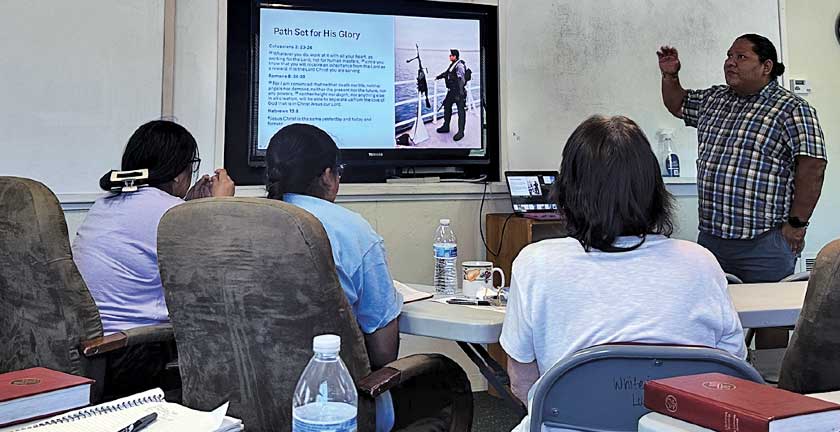
Nathan Wagenknecht serves as outreach counselor for the WELS Native Christians team. Based in Farmington, N.M., near the Four Corners region of Arizona, Colorado, New Mexico, and Utah, he partners with the local WELS congregation, Christ the Rock, and TELL Network, WELS’ online leader training program, to reach out to Native Americans with the gospel. His local focus is on the Navajo, Apache, and Ute reservations near Farmington, but the Native Christians team is working to expand its online and social media presence to reach more reservations across the United States and Canada.
“Our goal is to help Native American Christians to lead others to Christ wherever they may be,” says Wagenknecht.
This unique mission work requires a team effort. Part of the outreach strategy is recruiting, training, and equipping Native Americans to be spiritual leaders in their own homes and communities. The Native Christians team is developing a Bible study program, facilitated by trained instructors via Zoom, that gives participants an opportunity to grow in their faith, deepen their knowledge of Scripture, and learn practical skills to share their faith with their families, friends, and neighbors.
“Aaron readily volunteered to be one of our teachers in the online Bible studies,” says Wagenknecht. People like Aaron, who are spiritually mature and passionate about proclaiming Christ’s love to their people, are vital to the efforts of the Native Christians team to spread the good news of Jesus to more Native Americans.
Learn more about the Native Christians team.