 |
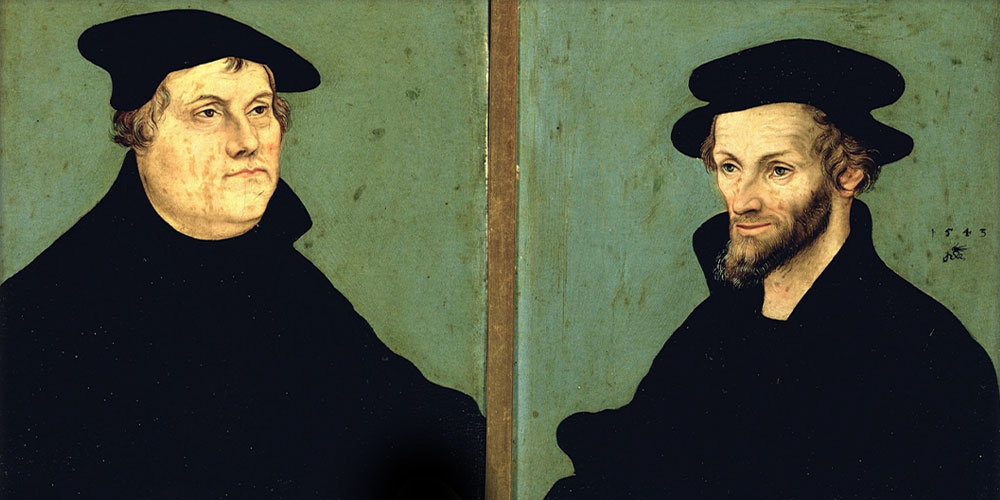
God used Philip Melanchthon’s distinct gifts to serve the church.
When people think about the Lutheran Reformation, one name comes to mind: Martin Luther. His bold stand, his powerful writing, and his Bible translation made him one of the best-known figures in church history.
Far fewer Christians, however, recognize the name Philip Melanchthon. Yet without Melanchthon, the story of the Reformation could have been very different. God used him in remarkable ways to preserve and proclaim the gospel alongside Luther. Their partnership reminds us that Christ builds his church through many different gifts and servants (Ephesians 4:11-16).
A scholar called by God
Philip Melanchthon (1497–1560) demonstrated extraordinary intellectual gifts from an early age. He entered the University of Heidelberg when he was only 12 years old and later earned advanced degrees while still a teenager. A gifted student of Greek and Latin, he quickly became known as one of Europe’s leading humanist scholars. His mastery of biblical Greek would become an invaluable gift to the Reformation’s return to Scripture as the sole source and standard of Christian doctrine.
In 1518, at just 21 years old, Melanchthon accepted a call to teach Greek at the University of Wittenberg. There he met Martin Luther. Although Luther was 14 years older and very different in temperament, the two men formed one of the most significant partnerships in the history of the Lutheran Reformation.
Luther often took the lead in defending the gospel during times of controversy. Melanchthon, by contrast, excelled at organizing, explaining, and teaching those same biblical truths so that pastors, students, and other Christians could understand them. Though their gifts differed, both faithfully served the same gospel.
Melanchthon loved learning and believed that education was one of God’s great blessings for both the church and society. He helped redesign schools throughout Germany, wrote textbooks, trained teachers, and encouraged communities to provide education for children—including girls. Because of his tireless work, he became known as Praeceptor Germaniae—“the Teacher of Germany.” His reforms shaped education throughout Protestant Germany for generations.
Melanchthon and Luther’s partnership illustrates an important truth about God’s kingdom: The Holy Spirit does not give every believer the same gifts (1 Corinthians 12:4-11). Some are called to preach publicly. Others teach, write, organize, encourage, or serve in quieter ways. Christ gives these different gifts for the good of his church, and he calls his people to use them faithfully in their various vocations.
A defender and teacher of the gospel
If Luther ignited and led the Reformation, Melanchthon helped explain it.
One of his greatest contributions came in 1521 with the publication of the Loci Communes (“Common Topics”), the first systematic presentation of Lutheran theology. Rather than discussing one doctrine after another without a clear plan, Melanchthon organized Scripture’s teaching around central biblical themes, such as sin, grace, faith, and justification. The book became an important textbook for pastors and students throughout Europe because it clearly demonstrated that the reformers’ teaching rested firmly on God’s Word.
Melanchthon’s greatest public contribution came in 1530. Emperor Charles V summoned the Lutheran princes to the Diet of Augsburg to explain their faith. Because Luther remained at Coburg Castle for his own safety, Melanchthon carried much of the responsibility for preparing the confession.
The result was the Augsburg Confession, one of the clearest confessions of the Christian faith ever written. Rather than attacking its opponents, the confession explained what the Lutheran churches believed from the Scriptures concerning God, sin, Christ, justification, the ministry, Baptism, the Lord’s Supper, and the Christian life. Its purpose was not to create something new but to show that the Lutheran churches faithfully taught the Christian faith handed down in the Scriptures.
When Roman Catholic theologians later issued an official document rejecting the Augsburg Confession, Melanchthon responded by writing the Apology of the Augsburg Confession, an even fuller defense of the doctrine of justification by faith. These writings remain part of the Lutheran Confessions today.
Melanchthon’s gift was making difficult theological questions understandable. He carefully defined terms, organized ideas, and connected Scripture. He understood that confusion about doctrine can lead to confusion about the gospel.
The same remains true today. Christians need clear biblical teaching because the message of forgiveness through Christ is too precious to become clouded by human opinions or false doctrine. Faithful teaching serves the gospel by directing sinners to the only Savior.
A flawed, humble servant
Although Melanchthon became one of the leading theologians of the Reformation, he rarely sought the spotlight. Much of his work happened behind the scenes—in lecture halls, at writing desks, through correspondence, and in difficult theological discussions.
Melanchthon also struggled personally. Where Luther responded to controversy with bold resolve, Melanchthon wrestled with anxiety and self-doubt, and the pressures of controversy weighed heavily on him. His desire for peace sometimes led to theological concessions that later Lutherans judged unwise, especially when some of his judgments became matters of serious controversy within Lutheranism. Yet throughout his life, Melanchthon remained committed to defending the central biblical truth that sinners are justified by grace through faith in Christ.
Scripture reminds us that God works through imperfect servants. Moses doubted his speaking ability. Jeremiah feared his youth. Timothy struggled with timidity. Their effectiveness rested not on their natural abilities but on God’s gracious power working through them (2 Corinthians 12:9-10).
The same can be said of Melanchthon: God graciously accomplishes great things through ordinary, imperfect servants.
An example for today
Melanchthon’s life offers several lessons for Christians today.
First, use the gifts God has given you. Every faithful vocation can serve Christ and strengthen his church.
Second, treasure sound doctrine because it preserves the gospel. Clear biblical teaching keeps sinners focused on Christ’s saving work alone (1 Timothy 4:16).
Third, serve Christ humbly whether others notice or not. God graciously works through the faithful service he himself produces in his people to bring glory to Christ and blessing to his church.
Martin Luther and Philip Melanchthon were very different men. Luther thundered with prophetic boldness, while Melanchthon patiently taught with scholarly precision. Yet both confessed the same saving gospel: Jesus Christ lived, died, and rose again to save sinners, and forgiveness comes by grace alone through faith alone in Christ alone.
God used these two servants in different ways to strengthen his church. He continues to work the same way today. Christ still calls ordinary Christians with different personalities, abilities, and vocations to proclaim his saving Word. Whether our service is widely known or quietly offered, we can be confident that God delights to use us for the glory of Christ and the spread of his gospel.
Learn more: Read a newer translation of the Augsburg Confession, The Unaltered Augsburg Confession, available at nph.net.
Author: Brian Hennig
Volume 113, Number 10
Issue: October 2026
Image: Portraits by Lucas Cranach the Elder; Frame from Magnific