 |
It started with a group of students who identified the need to include Jesus in conversations around mental health.
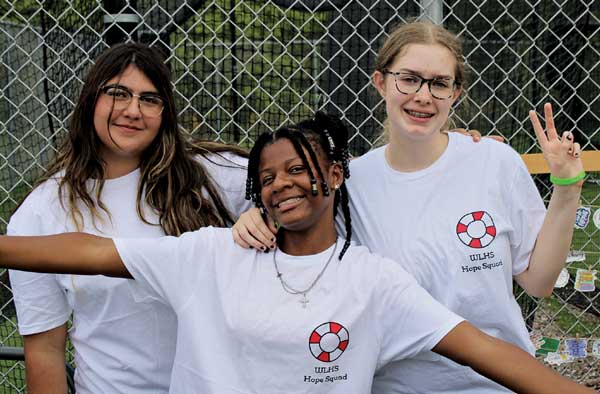
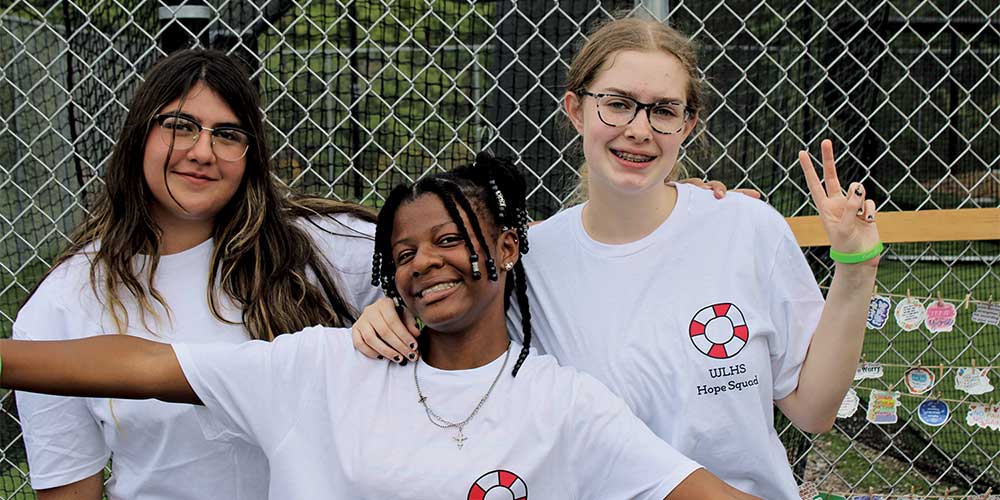
During the 2025–2026 school year, a group from Hope Squad, an evidence-based peer-to-peer suicide prevention program at Wisconsin Lutheran High School (WLHS), Milwaukee, Wis., along with school counselor Katie Chavez, attended a state-held mental wellness summit in Madison, Wis., that presented ideas that didn’t always align with God’s Word.
Chavez says, “We got in the van, and on the way home I was talking to the kids, asking, ‘Do we do this again next year?’ As we talked about it, they said, ‘Hey, Mrs. Chavez, the one thing that was missing was Jesus. Why don’t we just do our own?’ ”
Chavez told the students they had an hour to convince her on the way home. “They came up with the entire plan to host a mental wellness summit because they thought we needed it in the Lutheran schools,” says Chavez.
WLHS hosted this summit in April 2026, with a goal of connecting counselors, members of Student Services, and students from different Lutheran high schools to share ideas and find ways to support one another. Chavez says, “What came out of it was an explosion of needs and conversation that we should be doing this more often.”
A follow-up call in August led to planned quarterly calls, and ultimately, a second summit, which will be held April 7, 2027, at Wisconsin Lutheran High School.
Chavez says that at the first summit, other attending schools took note of Hope Squad. “What Hope Squad has turned into is not necessarily suicide prevention but mental health awareness and reducing the stigma around mental health,” she says. “We’re creating a climate where students will talk if they need something, so it’s more preventative and we’re seeing fewer crises.”
Hannah Rimpel, a 2026 WLHS graduate and now a freshman at Martin Luther College, New Ulm, Minn., says, “Being in Hope Squad for all those years taught me the importance of resiliency and that having a strong support group among peers, friends, family, and, of course, your Savior [is] imperative to having a successful high school career.”
Hope Squad was implemented after COVID when the school’s counselors noted an increase in students coming to them with a lack of resiliency skills; challenges with getting through things and over things; and ultimately, in too many cases, suicide ideation. Grey Davis, WLHS director of Student Services, shares, “Since 2021, because of the work we’re talking about, we have had a 37 percent decrease in referrals to Christian Family Solutions.” Over that time, he says, WLHS has seen a 200 percent increase in Hope Squad participation.
“As a student, I was surrounded by my peers daily and knew of some struggles they were having. I used what I learned through Hope Squad to help them the best I could,” says Grace Solie, a 2026 WLHS graduate and a Hope Squad member for three years. “I believe having a community like Hope Squad at schools is a huge way to make students feel comfortable in asking for help. It is a very difficult thing to do, but through our program we got to use God’s Word in encouraging students and helping them.”
The main topic at the April 2027 summit will be resiliency. Says Chavez, “We have a duty to get these kids anchored in their faith and to have the skills to tackle anything that life is going to throw at them.”
Author: Amanda Klemp
Volume 113, Number 11
Issue: November 2026